
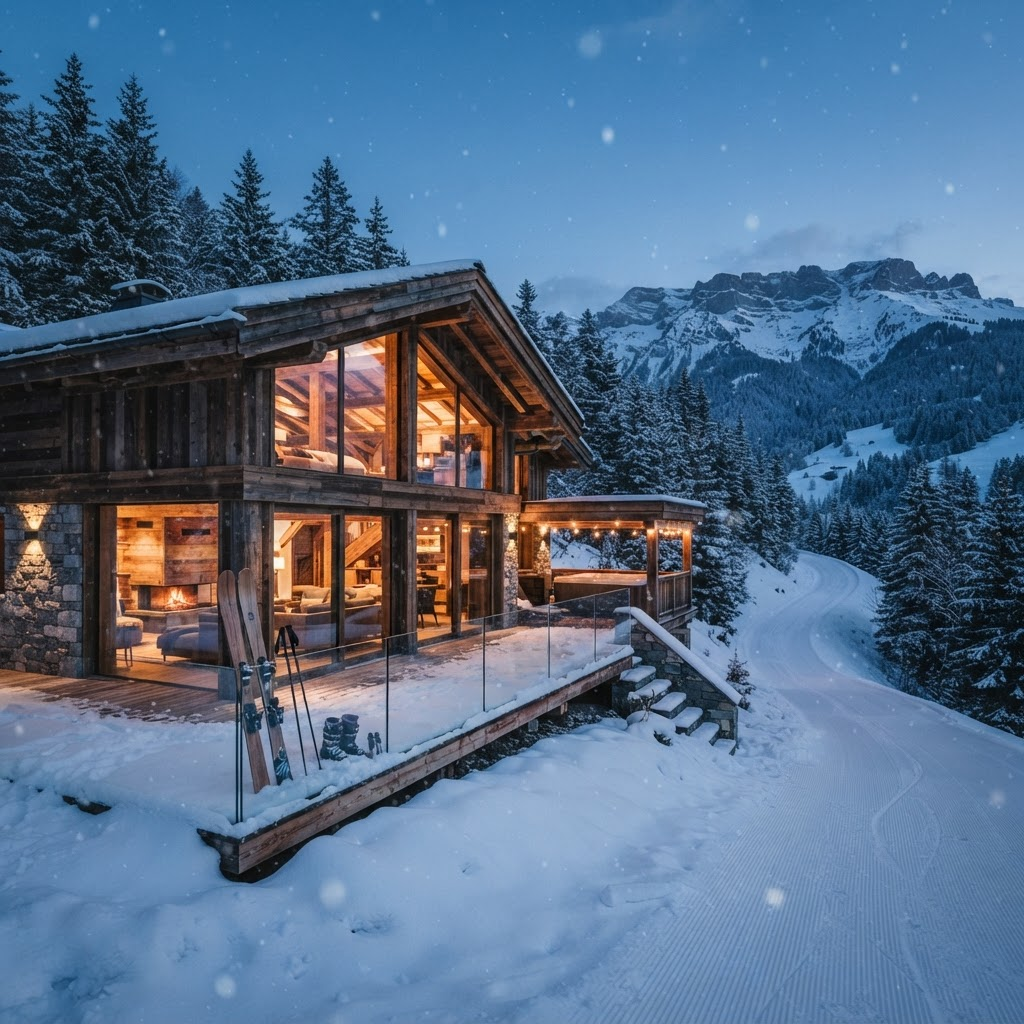
Luxury ski resort advertising has a problem that most luxury categories would envy: the audience is too concentrated. The households that buy $8 million ski-in/ski-out homes, join private mountain clubs, fly private into Eagle County or Jackson Hole and book $4,000-a-night suites in Deer Valley are a few hundred thousand at most, and for roughly sixteen weeks each winter a large share of them are physically located in about a dozen ZIP codes. That concentration makes the audience unusually cheap to reach and unusually easy to waste money on, because the tools most agencies use for affluent targeting are built for populations spread across the country, not for one that moves to the mountains every December.
This guide covers who the affluent skier and mountain-home audience actually is, how large and how wealthy it is, the data that identifies it, where and when it concentrates, what each channel costs and delivers, and how to structure a plan. It is written for resorts, mountain real estate developers and brokerages, private mountain clubs, and for the private aviation, wealth management, automotive and luxury goods brands whose customers happen to ski.
How large is the affluent ski audience?
The National Ski Areas Association reports roughly 60 million skier visits per U.S. season in recent years, generated by something on the order of 10 to 11 million individual participants. Most of those participants are day-trippers and occasional visitors. The luxury-relevant audience is much narrower, and it is best understood in tiers.
| Tier | Definition | Estimated U.S. households | Typical annual ski-related spend | Index on $5M+ net worth (national = 100) |
|---|---|---|---|---|
| Mountain-home owners at destination resorts | Own a residence in a top-tier ski market (Aspen/Snowmass, Vail/Beaver Creek, Jackson Hole, Park City/Deer Valley, Telluride, Sun Valley, Big Sky, Steamboat, Stowe, Lake Tahoe) | 90,000–140,000 | $150,000–$1M+ (carrying costs, club dues, travel) | 600–1,000 |
| Private mountain club members without local property | Yellowstone Club, Cordillera, Snowmass Club, Glenwild, Promontory, Tuhaye, Spanish Peaks and similar | 20,000–35,000 (overlaps heavily with above) | $50,000–$250,000 | 700–1,200 |
| Destination luxury ski travelers | Two or more trips per season to destination resorts, lodging at $1,000+ per night | 250,000–400,000 | $25,000–$80,000 | 250–450 |
| Aspirational destination skiers | One destination trip per season, mid-to-upper lodging | 1.2–1.8 million | $6,000–$20,000 | 120–200 |
| Regional and day skiers | Local hills, season passes, day trips | 6–8 million | Under $5,000 | 90–130 |
The first three tiers together are roughly 350,000 to 550,000 households. That is the audience for a luxury ski resort, a mountain real estate developer or a private club, and it is also one of the densest concentrations of $5 million-plus households in any lifestyle segment. Our post on ultra-high-net-worth advertising targeting covers how small those top wealth tiers are nationally; the mountain-home owner tier alone can account for 5 to 8 percent of them.
The mega-pass era matters here. Vail Resorts and Alterra sell several million Epic and Ikon passes per season combined, and the pass holder base is broad and mid-market. A brand that targets "Epic pass holders" is buying the bottom two tiers. The affluent tiers are defined by where they sleep, not by which lift ticket they scan.
Why standard affluent targeting misses the mountain-home audience
Most affluent segments are built on primary-residence data: home value, mortgage, income, and purchases shipped to the home address. Mountain homes break that logic in three ways.
First, the mountain property is usually a second or third residence held in an LLC or trust, so it rarely appears against the owner's primary address in consumer files. A wealth model built on the primary home in Dallas or Greenwich sees a $3 million house and files the household as affluent-but-not-ultra; the $12 million Aspen house in an LLC is invisible.
Second, the audience is mobile and its device graph fragments. A family that spends December through March in Vail generates IP addresses, location signals and streaming sessions in Colorado that most household-level identity systems do not tie back to the primary home in Chicago. The result is either a household counted twice or, more often, a Vail-season presence that carries no wealth attributes at all.
Third, purchases that reveal mountain wealth, such as club initiation fees, ski-valet memberships, heli-skiing bookings, private mountain guides and property management contracts, are not in the transaction feeds that feed inference models. The signal exists, but it sits in resort, club and brokerage systems, not in third-party data.
The consequence is that a "luxury skier" segment purchased off the shelf from a DSP usually contains the aspirational tier and a random slice of pass holders. It indexes perhaps 1.5 to 2 times the national average on $1 million-plus net worth. The real audience indexes six to ten times.
What data identifies affluent skiers and mountain-home buyers
Reaching the top tiers requires building a deterministic seed from sources that actually observe mountain wealth, then extending it carefully. Sources we use, in rough order of reliability:
- County property records in destination ski counties. Pitkin (Aspen), Eagle (Vail/Beaver Creek), Teton WY (Jackson), Summit UT (Park City/Deer Valley), San Miguel (Telluride), Blaine (Sun Valley), Gallatin/Madison (Big Sky), Routt (Steamboat) and the Tahoe-basin counties. Filter by assessed value above a threshold, owner-occupied or second-home flag, and mailing address outside the county. Where the owner is an LLC, resolve through registered-agent and mailing-address matching. This yields the core 90,000 to 140,000 household file.
- Resort and club first-party data, for brands that are the resort or club or can partner with one: season-pass holders at premium tiers, ski-valet and locker programs, private lesson buyers, club member rosters and wait lists.
- Private aviation arrivals: FBO traffic into Aspen (ASE), Eagle (EGE), Jackson (JAC), Heber (HCR), Telluride (TEX), Sun Valley (SUN) and Bozeman (BZN) is heavily seasonal and almost entirely affluent. Aviation partners and FBO DOOH networks can provide reach without exposing individual identities.
- Luxury lodging and travel-advisor data: bookings at $1,000-plus-per-night properties in destination markets via consortia partners and clean-room matches, which we discuss in our guide to luxury travel advisor advertising.
- Publication subscribers and event attendees: regional luxury lifestyle titles, Aspen Ideas Festival, Sun Valley Film Festival, Jackson Hole Fall Arts Festival, Vail Dance Festival and similar programs draw the same households.
- Seasonal geo-behavior: households observed, via consented location or IP signals, in a destination ski ZIP for 14-plus nights across two consecutive winters. This is inferred rather than deterministic and should be used as a qualifier layered on other signals, not as a seed on its own.
Onboarded through a clean room or a provider such as LiveRamp, a combined seed typically yields 55 to 70 percent match rates to CTV and programmatic identifiers, consistent with what we see in our first-party data work for other luxury verticals.
Where and when the mountain audience concentrates
The defining feature of luxury ski resort advertising is the calendar. The audience moves, and the plan has to move with it.
| Window | What is happening | Where the audience is | Media implication |
|---|---|---|---|
| Mid-September to mid-November | Pre-season: property closings, club renewals, trip planning, season-pass deadlines | Primary residences (NYC metro, Dallas/Houston, Chicago, SF Bay, LA, Denver, Miami/Palm Beach) | National CTV and programmatic against the seed; real estate listings and club campaigns launch |
| Thanksgiving to mid-December | Opening weeks; early holiday arrivals | Mixed | Begin geo-layered DOOH and mobile in resort towns; maintain national CTV |
| December 20 to January 5 | Peak holiday: highest concentration of the year | Resort towns; airports ASE, EGE, JAC, HCR, SUN | Full in-market layer: airport and FBO DOOH, resort-town OOH, geo-fenced CTV and audio |
| January to mid-February | Steady high season; Aspen's X Games and Winter Words, Sundance in Park City (late Jan) | Resort towns, weekday-heavy | In-market plus national; best value CPMs of the season |
| Presidents' Day to end of March | Second peak: spring break, best snow | Resort towns | In-market layer at peak weight; real estate showings peak |
| April to May | Closing; property transactions close; owners depart | Transition | National retargeting of in-season exposed; summer hospitality shift |
| June to August | Summer season: Aspen Music Festival, Jackson Hole summer, Big Sky and Telluride events | Resort towns again, different audience mix | Lighter in-market layer; strong period for real estate and club campaigns |
Geographically, the affluent tiers are extremely concentrated. Pitkin County has roughly 17,000 permanent residents and something like 6,000 to 8,000 homes valued above $3 million. Teton County, Wyoming, has about 23,000 residents and one of the highest per-capita incomes of any U.S. county. Eagle County, Summit County (Utah) and San Miguel County are similar in structure. These are places where a geo-fenced CTV buy against ad-tier streaming, plus DOOH at the airport, the gondola plaza and the main street, plus streaming audio against local IPs, can reach 60 to 75 percent of the in-market luxury audience in a two-week window.
Channel economics for luxury ski resort advertising
The following ranges reflect campaigns we have planned and bought for resort, real estate, private club, aviation and wealth-management clients targeting this audience. They are intended as planning guidance.
| Channel | Role in plan | Typical CPM | Notes |
|---|---|---|---|
| Premium CTV via PMP (Netflix, Prime Video, Disney+, Peacock, Max), seed-matched nationally | Primary reach in pre-season and shoulder | $38–$65 | Match-rate dependent; frequency cap 3–5/week |
| Premium CTV geo-fenced to resort counties in season | In-market reinforcement | $45–$75 | Small geo means limited scale; pair with DOOH |
| Live sports streaming (golf, F1, tennis, alpine World Cup on Peacock/Outside) | Affluent-indexing content layer | $50–$90 | World Cup alpine coverage is small but precisely aligned |
| Airport and FBO DOOH (ASE, EGE, JAC, HCR, SUN, BZN, plus private terminals) | Highest-concentration in-market touchpoint | $30–$70 (CPM-equivalent) or flat monthly | FBO networks reach arriving private flyers; limited inventory, book early |
| Resort-town street and gondola-plaza DOOH | In-market awareness | $20–$45 | Municipal sign codes restrict inventory in Aspen, Telluride, Jackson |
| Streaming audio (Spotify, SiriusXM, Audacy) geo-targeted | In-car and in-home reinforcement | $18–$32 | Long drives from Denver to Vail/Aspen are a real listening window |
| Programmatic native and display on premium editorial (WSJ, Bloomberg, Robb Report, Mansion Global, Outside) | Consideration and listings | $14–$35 | Mansion Global and WSJ Real Estate over-index for mountain buyers |
| Print (regional luxury titles, Aspen Sojourner, Mountain Living, Jackson Hole Magazine) | Credibility and real estate | $8,000–$30,000 per placement | In-home placement in rentals and lodges reaches the travel tier |
| Paid social (Meta, Instagram) seed-matched | Retargeting and event promotion | $12–$28 | Weak for seed reach; useful for creative frequency |
A representative mid-season plan for a mountain real estate developer or luxury resort might allocate 40 to 50 percent to CTV (split national pre-season and geo in-season), 15 to 20 percent to airport and resort DOOH, 10 to 15 percent to premium editorial and native, 8 to 12 percent to streaming audio, and the remainder to print and social. Our post on luxury advertising budget allocation covers the general logic.
Which luxury brands should advertise to the affluent ski audience
The obvious advertisers are the resorts, the developers and the private clubs. The less obvious ones often have the better economics.
- Private aviation. Winter ski travel is one of the two largest seasonal drivers of jet card and charter demand, alongside summer Hamptons and Nantucket flying. A jet card provider advertising to mountain-home owners in October is talking to a household that will make 6 to 12 mountain round trips before April. We cover the acquisition math in our post on private aviation customer acquisition cost benchmarks.
- Wealth management and private banking. Mountain-home purchases are frequently structured with liquidity events, trusts and LLCs, and the owners are disproportionately founders and executives. Advisory firms with a presence in Denver, Salt Lake City or Jackson have a natural regional angle.
- Luxury automotive. Range Rover, Mercedes G-Class, Porsche Cayenne and Rivian purchases cluster in these counties, and dealers in Denver, Salt Lake and Boise treat the mountain corridor as core territory.
- Private-client insurance. High-value second homes in wildfire and avalanche exposure zones are difficult to insure and represent an acute need.
- Luxury goods and watches. Aspen, Vail Village and Park City's Main Street host boutiques for most major houses precisely because the in-season audience is worth the rent.
- Destination hospitality and private residence clubs. Owners in one mountain market are the best prospects for a second in another, or for a residence club that gives them the Caribbean in the summer.
How to structure a luxury ski resort advertising plan
The following sequence is what we apply to this audience. It assumes a brand with a high-value customer and a sales cycle measured in months.
- Build the deterministic seed first. Property records across the destination counties, resolved through LLC ownership, plus any resort, club or lodging partner data. Target a seed of 60,000 to 120,000 households before match. Do not start with a DSP "luxury skier" segment.
- Run the national pre-season flight against the seed on premium CTV. September through November, frequency capped at three to five per week, with creative that speaks to the season ahead rather than to skiing generically. This is where real estate listings, club membership and aviation offers should launch.
- Layer in-market media on the calendar, not on impressions. Airport and FBO DOOH from mid-December, geo-fenced CTV and audio in the resort counties from the holiday peak, and hold weight through March. Book DOOH by early October; the good inventory sells out.
- Use the in-season geo signal to qualify, not to seed. Households observed in-market for two consecutive winters, layered on any wealth signal, become a second seed for the following season.
- Extend cautiously. Lookalike models built from a mountain-home seed drift quickly toward general affluence. Constrain models to households with second-home, private aviation or high-value travel signals, as we describe in our affluent lookalike modeling guide, and cap extension at two to three times the seed.
- Measure with a holdout. Split the seed into treatment and control before the pre-season flight, and read inquiries, showings, club applications and bookings over the full season. Mountain real estate has a six-to-eighteen-month cycle; a two-week attribution window will show almost nothing.
- Retarget the exposed after the season. April through June is when property transactions close and club decisions are made. The households that saw the creative in January are still the audience.
Creative notes for the mountain audience
The affluent ski household is not looking for a picture of a skier in fresh powder; it has that picture, and it took it. Creative that performs for this audience tends to be architectural and quiet: the view from the house, the arrival at the FBO, the empty groomer at first light, the fireplace at four in the afternoon. Specificity beats aspiration. Naming the mountain, the run or the neighborhood signals that the brand belongs there. And because the audience is small and will see the campaign repeatedly across CTV, DOOH and audio, rotate at least three creative executions and refresh mid-season; our post on CTV creative wear-out and rotation covers the rotation math.
Common mistakes in luxury ski resort advertising
- Buying pass-holder or "ski enthusiast" segments and calling it luxury. These reach millions of mid-market households and almost none of the mountain-home tier.
- Targeting resort ZIPs year-round. The permanent population of these towns is largely service and hospitality workers; the affluent audience is present roughly sixteen weeks in winter and eight in summer.
- Ignoring the primary-residence markets in the pre-season. The most important decisions, property, club and aviation, are made in September and October in New York, Dallas, Chicago and the Bay Area, not on the mountain.
- Under-investing in airport and FBO inventory. For the top tier, the private terminal is the single most concentrated touchpoint that exists in any luxury vertical.
- Attributing on a short window. A mountain-home inquiry that converts eleven months later is normal, and a plan that cannot wait for it will cut the channels that produced it.
- Failing to resolve LLC ownership. Without it, the seed misses most of the highest-value properties.
Where Stillwater Media fits
Stillwater Media plans and buys premium CTV, programmatic, digital out-of-home and streaming audio for luxury and high-consideration brands, including resorts, developers, private clubs and the aviation, wealth-management and automotive brands whose customers ski. We build seeds from property, aviation and partner data rather than from off-the-shelf segments, we plan to the mountain calendar, and we measure against holdouts over the full sales cycle. We take a limited number of new engagements each quarter. If your brand's customer is worth more than $5,000 and your winter plan is still built on "ski enthusiast" segments, apply to work with us.