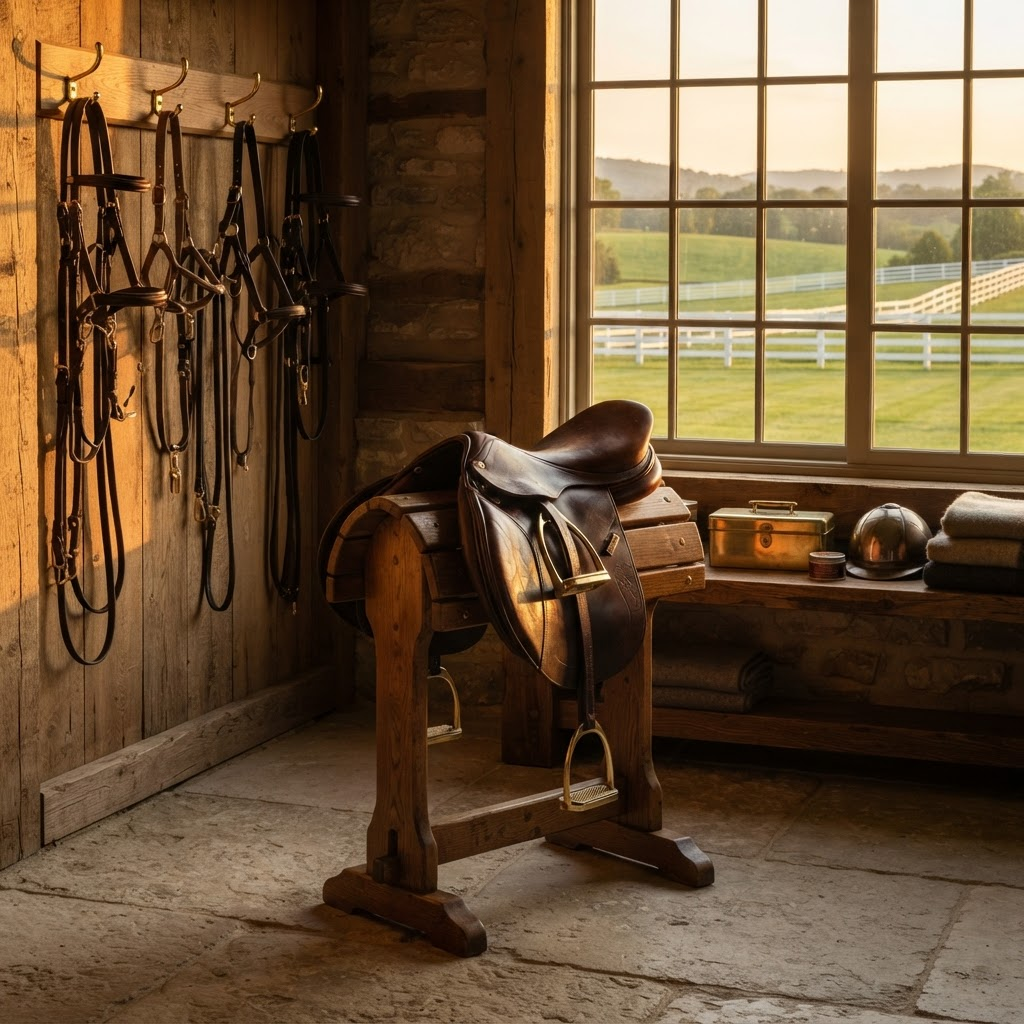
A competitive hunter-jumper household in Wellington, Florida, spends more on its horses in a single winter season than most American families earn in a decade. The horse itself may cost $250,000 to $2 million, board and training in season run $4,000 to $12,000 per horse per month, the show fees for the twelve-week Winter Equestrian Festival exceed $50,000, and the household typically arrives by private aircraft, keeps a second or third home nearby and insures the whole operation through a private-client carrier. Equestrian advertising is one of the few remaining ways to reach a large, verifiable concentration of ultra-high-net-worth households that mass affluent segmentation consistently misses, because horses do not appear in income models, credit files or property records in any way the standard wealth-scoring vendors know how to read.
This is Stillwater Media's guide to the equestrian and polo audience: how large it is, how wealthy it actually is at each tier, the data that identifies it, where and when it concentrates, what each channel costs, and how brands in private aviation, luxury real estate, wealth management, automotive and luxury goods should structure a plan against it, with or without a sponsorship budget.
How big and how wealthy is the equestrian audience?
The American Horse Council's economic impact study puts the U.S. horse population at roughly 6.6 million animals across approximately 1.6 million horse-owning households, with a further 30 million or so Americans who participate in equestrian activity as riders, spectators or family members. That headline number is misleading for luxury planning because it includes ranch, working and backyard horses. The audience that matters is the competitive and lifestyle tier.
| Segment | Estimated U.S. households | Annual equestrian spend per household | Share with $1M+ investable assets | Net worth index vs. U.S. average (100) | Primary identifiers |
|---|---|---|---|---|---|
| Elite competition (hunter/jumper, dressage, eventing at rated shows; polo patrons) | 25,000–40,000 | $150,000–$1,000,000+ | 65–80% | 900–1,400 | USEF/USHJA/USPA membership, show entries, horse registrations, equine insurance, farm ownership |
| Serious amateur (rated shows regionally, 1–3 horses in training) | 90,000–130,000 | $40,000–$150,000 | 35–50% | 400–600 | USEF membership, trainer boarding, equine insurance, trailer/truck registration |
| Lifestyle owner (owns horses at home or boards, rides recreationally, attends events) | 350,000–500,000 | $10,000–$40,000 | 15–25% | 200–300 | Farm/acreage ownership, feed and tack purchase data, publication subscriptions |
| Affluent spectator and enthusiast (attends polo, Devon, Kentucky Derby, WEF; does not own) | 1.5–2.5 million | Under $5,000 | 10–20% | 150–250 | Event ticketing, hospitality purchases, club membership, publication readership |
The top two tiers, roughly 115,000 to 170,000 households, are the equestrian audience for a luxury brand. They index on $1 million-plus investable assets at four to nine times the national rate, which is a higher wealth density than any affluent ZIP code, any luxury-publication readership or any modelled "top 5 percent" segment we have tested. They are also relatively young for an ultra-wealthy cohort: the competitive amateur tier skews 35 to 60, and a large share of the spending is directed by women, which matters for creative and for the brands that have historically under-indexed there.
Why standard affluent targeting misses horse owners
Wealth models are built from income, home value, investable-asset estimates and purchase behaviour. Equestrian spending sits outside all four. A $2 million horse is not a registered asset, board and training are paid to small private trainers rather than to any merchant category a data vendor tracks, and the primary residence is often a working farm with a modest assessed value relative to the household's wealth. The result is that a family spending $600,000 a year on sport horses can be scored as merely comfortable by an off-the-shelf affluent segment.
Reaching this audience therefore depends on equestrian-specific data, most of which is deterministic:
- Federation and association membership. The United States Equestrian Federation (USEF) has roughly 80,000 competing members, the U.S. Hunter Jumper Association about 40,000, the U.S. Polo Association about 4,500 registered players with a much larger patron and spectator community, and the U.S. Dressage Federation around 30,000. Several of these lists are licensable for advertising through their media partners or through onboarding to a clean room.
- Show entry and results data. Competition results are public and published by the shows and federations. A household with entries at WEF, Devon, the Hampton Classic, Aiken, Tryon or Thermal is, by definition, elite-tier.
- Equine insurance and mortality coverage. Carriers that insure horses above roughly $100,000 in value have, in effect, a list of the top tier, and several private-client insurers cross-sell home and auto to the same households.
- Farm and acreage property records. Parcels with barns, arenas and equine zoning within a 30-mile radius of the major show venues are the real-estate expression of the audience.
- Publication and media subscriptions. The Chronicle of the Horse, Practical Horseman, Sidelines, Polo Players' Edition, Horse & Hound and Noelle Floyd have small, highly qualified audiences that can be matched.
- Retail and services data. High-value tack, custom saddlery, equine veterinary and farrier services, and horse transport (both trailer and air freight) are purchased almost exclusively by owners.
Onboarded through LiveRamp, Experian or a platform clean room, a composite of these sources produces a deterministic seed of 40,000 to 90,000 households with match rates of 55 to 70 percent to CTV and programmatic identifiers. Our post on data clean rooms for luxury advertisers covers how to assemble seeds like this without transferring the underlying lists.
Where and when the equestrian audience concentrates
Equestrian advertising has an unusual planning advantage: the audience moves to a handful of places on a known calendar, and for weeks at a time it is geographically dense enough to buy at the ZIP-code level.
| Location | Season | Anchor event | Approximate elite households present | Notes |
|---|---|---|---|---|
| Wellington, FL | January–March | Winter Equestrian Festival, Global Dressage Festival, U.S. Open Polo Championship (International Polo Club) | 8,000–12,000 | The single densest concentration of equestrian wealth in North America; strong private-aviation and real-estate overlap |
| Ocala, FL | January–March | World Equestrian Center Winter Spectacular, HITS Ocala | 4,000–6,000 | Rapid growth; hotel and residential development attached to venue |
| Aiken, SC | October–April | Aiken Horse Show, polo season, eventing | 2,000–3,500 | Old-money profile; strong wealth-management and second-home overlap |
| Thermal / Coachella Valley, CA | January–March | Desert International Horse Park circuit | 3,000–4,500 | West Coast counterpart to Wellington |
| Tryon, NC | April–October | Tryon International Equestrian Center | 2,000–3,000 | Regional Southeast hub |
| Lexington, KY | April–May, October | Kentucky Three-Day Event, Keeneland sales, Kentucky Derby | 3,000–5,000 (event-driven) | Thoroughbred ownership and breeding wealth; distinct from sport-horse audience |
| Middleburg / Upperville, VA | May–June, fall | Upperville Colt & Horse Show, Virginia Gold Cup, foxhunting season | 1,500–2,500 | Washington-adjacent old-money profile |
| Bridgehampton, NY | Late August–September | Hampton Classic | 3,000–5,000 (event week) | Overlap with Hamptons summer audience |
| Devon, PA | Late May–early June | Devon Horse Show | 2,000–3,000 (event week) | Philadelphia Main Line profile |
| Greenwich / Fairfield County, CT | June–September | Greenwich Polo Club season | 1,500–2,500 | Finance-industry patron base |
The Wellington winter alone is a media opportunity most luxury brands have never planned against. For twelve weeks, several thousand of the wealthiest households in the country live within a six-mile radius, watch streaming television in rented or owned homes on local IP addresses, drive a limited set of roads past a limited set of screens, and are reachable through geo-fenced CTV, DOOH and programmatic at costs far below what a sponsorship at the same venue would require.
Channel economics for equestrian advertising
The instinctive move for a luxury brand entering the space is a title or ring sponsorship at a major show. Those have their place, but the cost per reached household is often ten to thirty times what a media plan against the same audience delivers.
| Channel | Role | Affluent equestrian CPM / cost basis | Reach against elite + serious tiers | Notes |
|---|---|---|---|---|
| Premium CTV, seed-matched (Netflix, Disney+, Prime Video, Peacock, Hulu) | Core reach and explanation | $55–$95 CPM | 55–70% of matched seed over a 12-week flight | Highest-quality reach; match via clean room; solo/first-in-pod placements |
| Premium CTV, geo-fenced to show markets in season | Incremental reach of unmatched households | $40–$70 CPM | Adds 15–25% reach beyond seed | Wellington, Ocala, Aiken, Thermal ZIPs; Jan–Mar and Oct–Apr |
| Equestrian streaming (USEF Network, ClipMyHorse.TV, FEI TV, Horse & Country) | Contextual, high-attention | $35–$80 CPM | 30–45% of elite tier | Small scale, exceptional composition; direct deals |
| Programmatic display/video in equestrian editorial (Chronicle of the Horse, Noelle Floyd, Sidelines) | Contextual frequency | $18–$45 CPM | 40–60% of elite tier | PMP or direct; small but dense |
| DOOH in show-market corridors and venue-adjacent retail | Presence and frequency in season | $25–$60 CPM (programmatic); $8,000–$40,000 per screen per season (direct) | 60–80% of households present in market | Wellington's South Shore Blvd corridor, Ocala's WEC approaches, Aiken Whiskey Road |
| Streaming audio and podcasts (equestrian and lifestyle) | Explanation and trust | $22–$45 CPM; host-read $30–$60 | 20–35% | Small; use for long-form message |
| Print (Chronicle of the Horse, Sidelines, Polo Players' Edition, Hunt & Polo) | Credibility | $4,000–$18,000 per page | 25–45% of elite tier readership | Retains unusual influence in this community |
| Show sponsorship (title, ring, grand-prix naming) | Presence, hospitality, relationship | $50,000–$1,500,000 per season | Variable; hospitality reaches 200–2,000 households | Cost per reached household $500–$5,000+; justified by hospitality and dealer access, not by media |
| Polo club and tournament sponsorship (IPC, Greenwich, Santa Barbara, Aspen) | Presence and hospitality | $25,000–$500,000 | 500–3,000 patrons and guests | Strong luxury-brand fit; media value secondary |
A brand with a $400,000 seasonal budget can, through seed-matched and geo-fenced CTV, equestrian streaming, DOOH and editorial programmatic, reach roughly 60 to 75 percent of the elite and serious tiers at an effective frequency of five or more, and measure it. The same $400,000 buys a mid-level sponsorship at one show, with hospitality for a few hundred guests and signage that nobody can attribute. The two are not exclusive: the best equestrian plans use a modest sponsorship for hospitality and credibility and a media plan for reach.
Which luxury brands the equestrian audience buys from
The audience's purchase behaviour maps almost perfectly to Stillwater Media's verticals, which is why we have built the data infrastructure for it.
- Private aviation. Show circuits require moving people and, frequently, horses between Florida, the Northeast and Europe. Jet-card and fractional programs index heavily; horse transport by air is its own sub-category. Our note on private aviation customer acquisition cost benchmarks explains why an audience that already flies privately is the lowest-CAC prospect the category has.
- Luxury and equestrian real estate. Farms, show-adjacent homes and estates in Wellington, Ocala, Aiken, Middleburg and Tryon trade at $2 million to $40 million. Developers and brokerages with equestrian inventory are the most natural advertisers in the space.
- Wealth management and private banking. Multi-generational, often business-owning, frequently liquidity-event households with complex holdings and a demonstrated habit of spending on passion assets. Trust, estate and family-office services resonate.
- Private-client insurance. Equine mortality coverage, farm and ranch policies, collector auto and umbrella liability are all cross-sold within the household.
- Automotive. Heavy-duty trucks and SUVs for towing sit alongside luxury sedans and sports cars in the same garage; Range Rover, Mercedes, Porsche and Ford's high-trim Super Duty all over-index.
- Luxury goods and fashion. Watches, jewelry, leather goods and heritage apparel brands with equestrian roots or aesthetics (Hermès, Longines, Rolex, Ralph Lauren, Gucci) have historically owned the space; challenger brands can enter through media rather than sponsorship.
- Hospitality and travel. Destination clubs, luxury hotels near show venues and safari or sporting travel operators.
How to structure an equestrian advertising plan
The plan we build for a luxury brand entering the vertical has five components.
- Assemble the deterministic seed. Combine federation membership, show-entry records, equine-insurance and equestrian-publication lists through a clean room or onboarder. Target 40,000 to 90,000 households; verify the wealth composition against a truth set before spending.
- Build a modelled extension, cautiously. Lookalikes from an equestrian seed drift quickly toward generic rural-affluent households. Constrain the model with equine-specific signals (tack retail, veterinary, trailer registration) and cap expansion at two to three times the seed. Our guide to affluent lookalike modeling covers the guardrails.
- Flight to the calendar. Weight 55 to 65 percent of annual spend into the January-to-March Florida and California season, 15 to 20 percent into the spring and fall Northeast and Mid-Atlantic events, and hold the remainder for always-on CTV against the seed. Geo-fence the show markets in season and layer DOOH on the venue corridors.
- Buy premium CTV on pod terms. This is an audience that watches prestige drama, sport and documentary on Netflix, Prime Video and Peacock; solo pre-roll and first-in-pod placements through publisher-side deals, with :60 creative for introduction, are the core of the plan.
- Measure with a holdout. Hold back 10 to 15 percent of the seed and, in season, one comparable show market (for example, run Ocala and hold Thermal), and read incremental inquiries, applications and closed business through the clean room over a 90- to 180-day window, since the sales cycles in aviation, real estate and wealth run long.
Creative notes for the equestrian audience
This community has an acute sense for brands that understand it and those that are borrowing its imagery. A few rules from experience:
- Get the discipline right. Hunter, jumper, dressage, eventing, polo and racing are different cultures with different tack, attire and language; footage of the wrong one signals that the brand does not know its audience.
- Do not feature a horse unless the shot is technically correct. Bad hands, incorrect tack or an unsound horse will be noticed by every viewer who matters.
- The buyer is frequently a woman in her forties or fifties running a family enterprise; creative aimed at a male "sportsman" archetype under-performs.
- Lead with the lifestyle problem the brand solves (moving between Wellington and Bridgehampton, insuring a $1.5 million animal, structuring a farm purchase), not with generic luxury cues.
Common mistakes in equestrian advertising
- Buying a sponsorship instead of an audience. Signage at one show reaches the households present for one week; media reaches the tier year-round.
- Relying on modelled affluence. Standard wealth segments miss most of the elite tier; the seed must be deterministic.
- Ignoring the calendar. A plan that spends evenly across the year misses the period when the audience is densest and most receptive.
- Treating racing, sport-horse and polo as one audience. They overlap at the very top but differ in geography, season and buying behaviour.
- Over-extending lookalikes. Rural-affluent households with a barn are not the same as a household campaigning three horses at WEF.
- Measuring on short windows. Aviation, real estate and wealth conversions from this audience arrive months after the flight ends.
Where Stillwater Media fits
Stillwater Media builds deterministic equestrian and polo audiences from federation, show-entry, insurance and publication data, matches them to premium CTV and programmatic inventory through clean rooms, geo-fences the show markets in season, and measures the result with holdouts read over the long sales cycles our clients' categories require. We work with a limited number of brands each quarter in private aviation, luxury real estate, wealth management, private-client insurance, automotive and luxury goods. If your brand belongs in Wellington in February and your media plan does not know it, we should talk. Apply to work with Stillwater Media.