
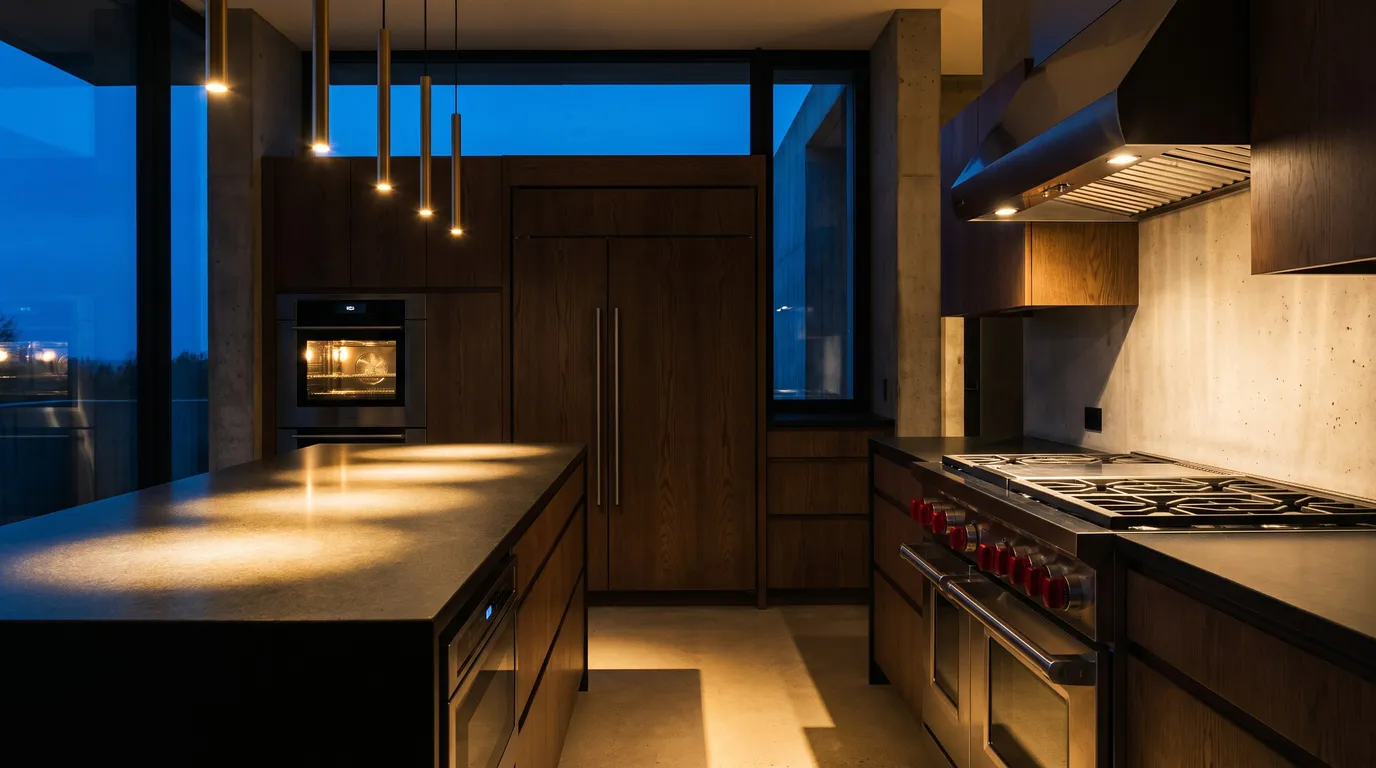
Luxury kitchen appliance brand advertising is really advertising to a committee. A $60,000 to $150,000 package of built-in refrigeration, a professional range, ventilation, wine storage and steam ovens is rarely chosen by one person on one afternoon. It is shaped by a homeowner's long-held taste, specified by a kitchen designer or architect, priced by a dealer, approved by a builder or remodeler, and often decided a year before the cabinets are installed. Kitchens remain the most popular high-end project: the 2026 U.S. Houzz & Home Study found median kitchen renovation spend rose about 9% to roughly $24,000 in 2025, and the top tier spends many multiples of that. This guide explains how premium appliance brands and their dealer networks can use CTV, programmatic, YouTube, social, search and trade media to win preference with affluent homeowners and the professionals who specify for them, and how to measure a program whose sale closes months later in a showroom.
What makes luxury kitchen appliance brand advertising different?
Appliance marketing at the mass level is driven by promotions, holiday sales and retailer circulars. The luxury tier works on a completely different model.
- The purchase is planned, not replaced. Most luxury suites are bought as part of a remodel or new build, not when an old unit fails. The trigger is a project, and the window opens long before installation.
- Professionals specify. Kitchen designers, architects and custom builders often choose the brand, or narrow the options to two. Winning them is half the battle.
- The showroom closes the sale. Cooking demonstrations, test kitchens and dealer showrooms are where intent turns into an order. Media's job is to fill those appointments with the right households.
- Brand meaning matters. Buyers are choosing something they will look at every day for twenty years. Heritage, design language and engineering credibility carry real weight.
- Discounting damages value. Frequent promotions teach buyers to wait and erode the margin of the dealers who carry the brand.
Who should luxury kitchen appliance brand advertising target?
There are three distinct audiences, and each needs its own message and media weight.
| Audience | Role in the decision | What they need to hear | Best channels |
|---|---|---|---|
| Affluent homeowners planning a project | Final decision and budget | Design, cooking performance, longevity, service | CTV, YouTube, social, native, search |
| Kitchen designers and architects | Specification and shortlisting | Integration, dimensions, ventilation, reliability, support | Trade programmatic, LinkedIn, trade publications, events |
| Builders, remodelers and dealers | Installation, pricing, availability | Margin, delivery, service network, co-op support | Trade media, dealer co-op programs, direct outreach |
Homeowner audiences are best built from property and life-stage signals: owners of high-value homes, recent buyers of luxury properties, households with remodeling or building permit activity, and people who have engaged with high-end design content. Our guide to affluent lookalike modeling shows how a brand's own warranty registration and showroom visitor data can seed larger, precise segments.
Which channels work for luxury kitchen appliance brand advertising?
Connected TV and YouTube
Cooking is visual, sensory and aspirational, which makes premium video the anchor channel. A well-shot CTV spot showing a steam oven, an induction surface or a column refrigerator in a beautiful kitchen does more to build preference than any spec sheet. Household-level targeting means the brand can concentrate spend on homes valued in the top tier of each market. Our guide to CTV advertising for high net worth consumers covers inventory choices, and YouTube Select for luxury brands explains how to place longer cooking and design content on premium channels.
Premium programmatic and native
Display, native and video on design, food, home and finance publishers keep the brand visible during the months of planning. Private marketplace deals keep the brand on quality sites and away from cluttered pages that cheapen the image.
Search
Homeowners search for model comparisons, "best luxury refrigerator," "induction vs gas range" and dealer locations. Search should prioritize brand terms, model terms and showroom booking pages, with comparison content that answers real questions honestly.
Social and inspiration platforms
Instagram, Pinterest-style inspiration platforms and short-form video are where kitchens get saved, shared and argued over. Designer collaborations and finished-kitchen stories outperform product-only posts.
Trade media and events
Specifiers read trade publications, attend design shows and take continuing education. Trade programmatic targeting by job title, plus presence at KBIS and regional design events, keeps the brand on specification lists.
How are induction, connected features and new formats changing the message?
The category is changing faster than it has in decades, and advertising has to explain those changes without overwhelming the buyer.
- Induction is moving upmarket. Premium brands now offer induction ranges and surfaces that match or beat gas on control, and many show-floor launches in 2026 put induction at the center. Buyers who grew up cooking on gas need proof: video of a hard sear, a gentle simmer and a quick boil does more than a specification table.
- Ventilation is being rethought. Downdraft and integrated ventilation make island cooking possible in open plans. That is a design story as much as a performance story, so it belongs in creative aimed at designers and architects as well as homeowners.
- Connected features need a purpose. Remote preheating, guided cooking and service alerts appeal when they solve a real problem. Lists of app features rarely persuade a buyer who cares most about cooking results and longevity.
- Column and panel-ready formats sell the look. Integrated refrigeration and wine columns let the kitchen read as furniture. Showing the finished wall, then opening the panel, is one of the most effective creative devices in the category.
- Outdoor kitchens are a second sale. Affluent households increasingly build outdoor cooking spaces. A separate seasonal flight, timed for late winter planning, often finds the same buyers again.
Where do streaming audio and out-of-home fit?
Streaming audio and podcasts reach affluent homeowners during commutes and cooking time. Food, design and business podcasts make natural homes for host-read messages that invite listeners to a showroom demonstration, and audio CPMs are usually lower than CTV, so they extend frequency at modest cost. Digital out-of-home near design districts, high-end grocery stores and the dealer's own neighborhood can reinforce a CTV flight, provided placements are chosen for audience quality rather than raw impressions. As Stillwater planning ranges, audio and out-of-home together typically take 10% to 20% of a homeowner-facing budget.
What should the creative say?
- Sell the kitchen, then the appliance. Show the product inside a complete, beautiful space before showing a close-up.
- Prove performance. Temperature precision, food preservation, steam cooking and ventilation capture are tangible benefits. Show them, with real food.
- Answer the design question. Panel-ready integration, finishes and how the appliances fit transitional and timeless kitchens matter. The NKBA 2026 Kitchen Trends research found that most design professionals expect transitional and timeless styles to dominate the next three years, so creative that looks current but not trendy ages well.
- Reassure on service. At this price, buyers worry about who repairs a unit in year eight. Mention the service network and warranty.
- Invite a demonstration. The call to action should be a showroom visit, a live cooking class or a consultation with a dealer, not a sale.
How should brands handle dealers and co-op advertising?
Most luxury appliance brands sell through independent dealers and showrooms, so the media plan has to work with the channel, not around it.
- Run national brand media, local dealer activation. The brand builds preference with CTV and video; dealers convert with local search, showroom events and appointment booking.
- Give dealers clean co-op creative. Templates with consistent visuals and room for the dealer's name and address protect the brand while making it easy for dealers to participate.
- Share audience data carefully. Showroom visitor and inquiry data should flow back to the brand through privacy-safe processes, so national media can suppress existing buyers and find lookalikes.
- Measure by dealer territory. Reporting showroom appointments and sales by territory makes co-op conversations factual rather than political.
Brands that sell through design centers can borrow from our guide to CTV for showroom visits for luxury home brands, and the luxury furniture and interior design advertising playbook covers the overlap with the same affluent homeowners.
What does luxury kitchen appliance brand advertising cost?
The following are Stillwater planning ranges, not published benchmarks. Actual costs depend on markets, inventory and creative.
| Metric | Stillwater planning range |
|---|---|
| Annual paid media for a national luxury appliance brand | $1.5 million to $8 million |
| Annual paid media for a regional dealer group | $150,000 to $750,000 |
| Premium CTV CPM (household-targeted) | $35 to $65 |
| Trade programmatic CPM (designers, architects, builders) | $25 to $70 |
| Cost per booked showroom appointment or cooking demo | $150 to $650 |
| Appointment to order conversion | 20% to 45% |
| Average order value for a full luxury suite | $40,000 to $150,000 |
At those order values, a cost per appointment of several hundred dollars is efficient, provided the appointments come from qualified households with active projects.
How should you measure luxury kitchen appliance brand advertising?
- Track showroom appointments as the primary conversion. Booking forms, phone calls and walk-ins should all capture a household address or email.
- Match orders back to media exposure. Dealer sales and warranty registrations can be matched to exposed households. Our offline conversion tracking guide explains how to connect the data.
- Run geographic holdouts. Withholding CTV from matched dealer territories for a quarter shows true lift in appointments and orders. See incrementality testing for luxury brands.
- Monitor branded and model search. Growth in searches for the brand and specific models during a flight is an early indicator.
- Survey the specifiers. A short annual survey of designers and architects on brand consideration shows whether trade media is working.
- Allow for the timeline. Many appliance orders happen six to twelve months after the homeowner first sees the brand. Read results on that horizon.
What are the most common mistakes?
- Running mass-market promotions. Holiday discounts train luxury buyers to wait and hurt dealer margins.
- Ignoring the trade. A brand that wins homeowners but not designers often loses at the specification stage.
- Showing products without kitchens. Isolated product shots look like a catalog, not a lifestyle.
- Optimizing to clicks. Cheap clicks rarely come from households with active remodels. Optimize to appointments and orders.
- Leaving dealers out of measurement. Without dealer sales data, the brand cannot see what its media produced.
- Spreading CTV nationally without territory logic. Spend should follow dealer coverage and high-value home concentration.
- Changing creative too often. Premium video needs repetition to build memory over a long planning window.
How should a brand sequence a year of media?
- Quarter 1: align with dealers on territories and data sharing, build audiences from warranty and showroom data, produce cooking and design video, and set up holdout territories.
- Quarter 2: launch CTV and YouTube in priority territories, run trade media around design shows, and activate dealer co-op search.
- Quarter 3: read appointment quality and order matchback by territory, refine creative, and expand to the next tier of markets.
- Quarter 4: run a planning-season flight aimed at homeowners starting spring projects, report incremental appointments and orders, and set year-two budgets with dealers.
Ready to build a luxury kitchen appliance brand advertising program?
Stillwater Media plans and buys premium CTV, YouTube Select, programmatic, streaming audio and social for luxury and high-consideration brands. We take on a limited number of engagements each quarter and build every program around private marketplace inventory, affluent audience engineering, brand safety and incrementality testing. Apply to work with Stillwater Media.
About the author: Stillwater Media is a selective performance media agency for luxury and high-consideration brands. Signal. Strategy. Scale.
Frequently Asked Questions
What is luxury kitchen appliance brand advertising?
It is paid media that premium appliance brands and their dealers use to build preference with affluent homeowners and the designers, architects and builders who specify kitchens. The goal is booked showroom appointments and orders, not promotional volume.
Which channels work best for luxury appliance marketing?
Household-targeted CTV and YouTube build preference because cooking and design are visual. Premium programmatic, search, social, trade media aimed at specifiers and dealer co-op search complete the plan.
How much does luxury kitchen appliance brand advertising cost?
As Stillwater planning ranges, national brands often spend $1.5 million to $8 million a year and regional dealer groups $150,000 to $750,000. Cost per booked showroom appointment commonly runs $150 to $650 against full-suite orders of $40,000 or more.
How should appliance brands work with dealers on advertising?
The brand should run national preference media while dealers convert locally with search, events and appointment booking supported by consistent co-op creative. Sharing appointment and sales data by territory makes it possible to measure what the media produced.
How do you measure luxury appliance advertising?
Use showroom appointments as the primary conversion, match orders and warranty registrations back to exposed households, and run geographic holdouts by dealer territory. Read results over six to twelve months, because many orders follow a long remodel or build.