
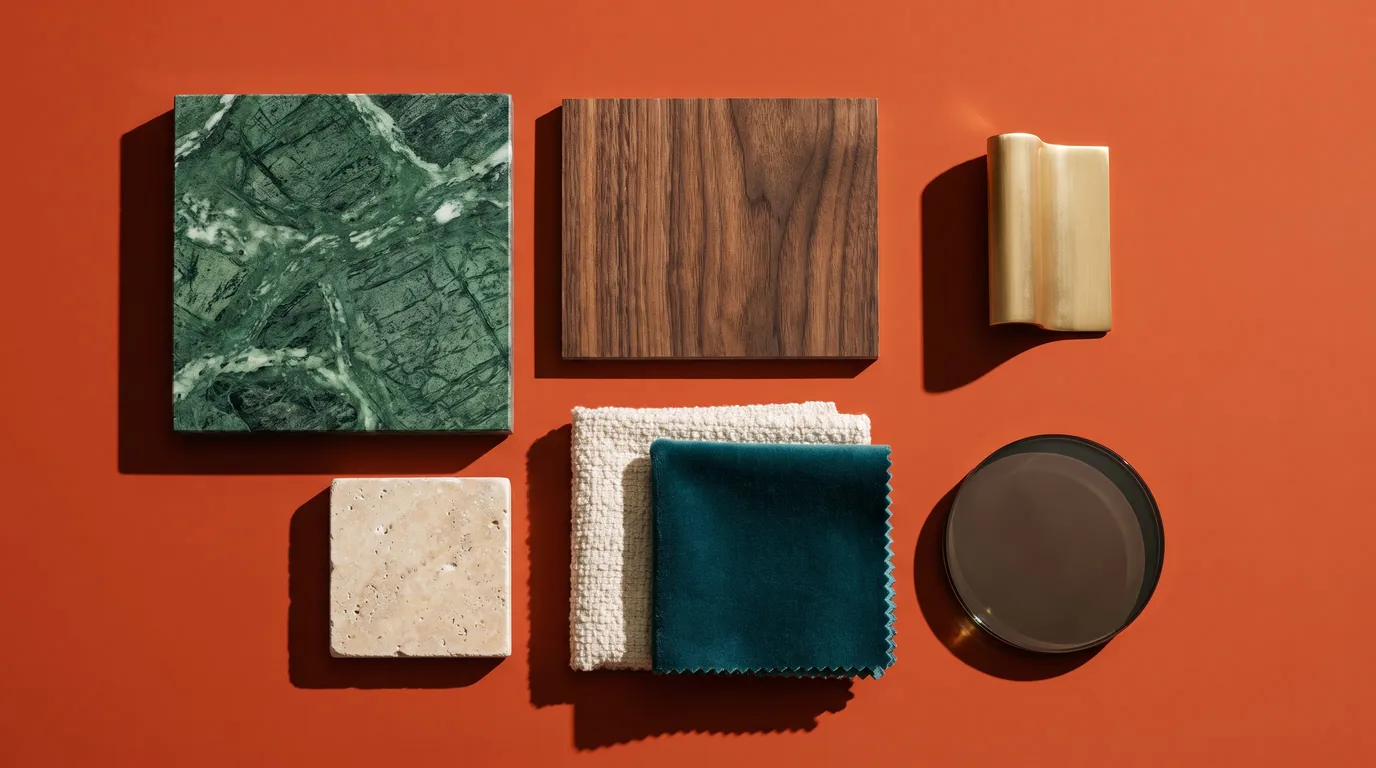
CTV advertising for showroom visits works for luxury home brands when it is planned around a physical outcome, not a click. A buyer considering a $40,000 sofa collection, a $120,000 kitchen or a custom closet system almost never purchases from an ad. They watch, research, save images, talk to a partner or designer, and then walk into a showroom. Connected TV is unusually good at starting that journey with affluent households, and with the right targeting radius, creative and measurement it can be tied directly to appointments and walk-ins.
This guide covers how to plan streaming TV for furniture, lighting, kitchen, bath, flooring, outdoor living and design-build brands that sell through showrooms or design centers, how to measure visits in a world of tighter location privacy rules, what to budget, and the mistakes that make showroom campaigns look like they failed when they did not.
Why does CTV advertising for showroom visits work in luxury home categories?
Luxury home purchases share three traits that suit streaming TV:
- High consideration. Large-ticket home purchases involve multiple decision makers and long research windows. A cinematic 30-second spot on the living room screen reaches both partners at once, in the room the product will live in.
- Visual product. Materials, proportion, light and craft sell these products. A sofa or range hood looks far more convincing on a 65-inch screen than in a 300x250 banner.
- Local fulfilment. The sale happens within a drive of a showroom. CTV can be targeted to the households inside that drive time, so every impression goes to a potential walk-in.
Affluent households have also moved much of their viewing to streaming, where ad-supported tiers on Disney+, Netflix, Prime Video and premium publisher apps now reach them in brand-safe, full-screen environments. For a broader view of the category, see our guide to luxury furniture and interior design advertising.
How should you target CTV advertising for showroom visits?
Targeting for CTV advertising for showroom visits starts with geography and narrows to wealth and intent.
What radius should you target around a showroom?
Use drive time, not a simple mile radius. Affluent buyers will travel for a high-ticket purchase, but there are limits. Stillwater planning ranges:
| Showroom type | Typical drive-time target | Notes |
|---|---|---|
| Single-brand furniture or lighting showroom | 30 to 60 minutes | Extend to 90 minutes for flagship locations |
| Kitchen, bath and appliance showroom | 30 to 75 minutes | Pair with designer and builder trade outreach |
| Design center with multiple brands | 60 to 120 minutes | Often the regional destination for a project |
| Outdoor living, pool and landscape design | 20 to 45 minutes | Service area usually limits the radius |
| Custom builder or design-build firm | Service area | Match to permit and job-site geography |
Which households should see the ads?
Inside the radius, layer audience signals that predict a home purchase:
- Home value and equity, from property records, to focus on homes where your price point fits.
- Recent movers and new purchasers, who furnish and renovate in the first 6 to 18 months.
- Renovation intent, from permit filings, design content consumption and contractor searches.
- Wealth and income indicators, combined rather than used alone.
- Lookalikes of past buyers, built from your CRM through a clean room or the DSP's onboarding.
Always suppress customers who purchased in the past 12 to 24 months unless the campaign is meant to drive repeat visits. You do not want to pay to remind last spring's buyer about the sofa they already own.
What creative brings people into a showroom?
Showroom creative has to do two jobs: make the product desirable and give a reason to visit in person now.
- Open with the space, not the price. Wide, slow shots of a finished room establish the brand. Close-ups of materials (grain, stitching, stone veining, brushed brass) justify the visit.
- Name the experience. "See the full collection in our design studio," "Book a private design consultation" or "Touch every finish in person" frames the visit as the next logical step.
- Localize the end card. Dynamic end cards with the nearest showroom name, hours and a short booking URL or QR code lift response without new production.
- Plan for three lengths. A 30-second hero for premium streaming, a 15-second cutdown for frequency, and a 6-second bumper for YouTube and sequencing.
- Avoid discount language. A "sale ends Sunday" message trains affluent buyers to wait and erodes price integrity.
QR codes on CTV can produce measurable scans, but most showroom visitors will not scan. Treat scans as a bonus signal, not the main KPI.
How do you measure showroom visits from CTV?
Measurement is where most showroom campaigns fall apart. There are four main methods, and the strongest programs combine at least two.
| Method | What it measures | Strengths | Limits |
|---|---|---|---|
| Appointment and booking matchback | Booked consultations from exposed households | Uses your own data; privacy-friendly; tied to revenue | Requires clean CRM and booking data |
| CRM sales matchback | Purchases from exposed households | Closest to revenue | Long lag; needs address or email match |
| Geo holdout test | Lift in visits, bookings and sales in exposed vs held-out regions | Proves incrementality | Needs enough regions and time |
| Mobile location foot-traffic studies | Device visits to showroom geofences | Fast read on visit volume | Privacy restrictions, panel bias, device matching gaps |
Is location-based foot-traffic attribution still usable?
It is usable, but with care. Several states now restrict how precise geolocation data can be sold or processed. Oregon's amended privacy law bans the sale of precise geolocation data from 2026, Maryland limits processing of sensitive data including precise location to what is strictly necessary, Virginia enacted a ban on selling precise geolocation data in April 2026 according to Troutman Pepper Locke's privacy team, and Connecticut followed with its own ban, as covered by Sourcepoint. The practical result is that foot-traffic panels can thin out in some states, and measurement vendors must document consent and data provenance.
Our recommendation: use location studies as a directional supplement and anchor the program on your own first-party appointments and sales, matched back to exposed households. Our guide to proving CTV drives revenue with CRM matchback explains the matching mechanics.
How do you prove the visits were incremental?
Run a geo holdout. Split your markets or ZIP clusters into matched groups, advertise in one and hold out the other for 6 to 10 weeks, then compare change in bookings, walk-ins and sales against the pre-period. With a single showroom, split the drive-time area into matched ZIP clusters. Our guide to geo experiment design for advertising covers sample sizes and pitfalls. For a worked example, see how a brand used a holdout in our luxury furniture CTV case study.
What should a luxury home brand budget for CTV advertising for showroom visits?
Budget depends on the number of households in your drive-time targets and the frequency needed to move them. Stillwater planning ranges:
| Item | Stillwater planning range |
|---|---|
| Premium CTV CPM through PMP deals | $35 to $70 |
| Target weekly household frequency | 2 to 4 |
| Minimum test length | 8 to 12 weeks |
| Monthly media per showroom market | $15,000 to $60,000 |
| Share of target households reached per month | 30% to 60% |
| Cost per incremental booked consultation | $150 to $900 |
| Cost per incremental showroom sale | $1,500 to $8,000 depending on ticket size |
To size a test, multiply the target household count by the reach percentage and frequency, divide by 1,000 and multiply by CPM. A drive-time area of 120,000 qualified households, reached at 40% with a frequency of 3 per week over 10 weeks at a $50 CPM, needs about 1.44 million impressions, or roughly $72,000 in media. That is enough to read a geo holdout if your baseline is at least a few dozen consultations per month.
How does CTV fit with the rest of the showroom media plan?
CTV works best as the opening move in a sequenced plan:
- Streaming TV introduces the brand and the showroom to qualified households.
- Programmatic display and native on premium home, design and lifestyle publishers retarget exposed households with collection imagery.
- Paid social and YouTube carry room tours, designer stories and booking prompts.
- Digital out-of-home near design districts and affluent retail adds local presence.
- Paid search captures the branded and showroom-name searches that CTV creates.
Expect branded search for the showroom to rise during the flight; measure that lift as a leading indicator. For neighboring categories, our guide to luxury home builder advertising shows how the same sequence works for new construction, and our luxury goods advertising page outlines the vertical approach.
What are the common mistakes with showroom CTV?
- Targeting the whole market. Buying CTV across a whole DMA when the showroom pulls from a 45-minute radius wastes most of the budget.
- Measuring on clicks or QR scans alone. CTV is not a click channel. Judge it on bookings, visits and sales.
- Short flights. Two-week bursts rarely give a long-cycle buyer enough exposure to act, and they cannot produce a readable test.
- No booking capture. If showroom staff do not log how visitors heard about the brand and the store does not capture email or address, matchback becomes guesswork.
- Ignoring the trade. Many luxury home sales flow through designers and architects. Track trade-referred visits separately so they are not miscounted as consumer lift or loss.
- Over-relying on foot-traffic panels. Location data has become thinner in several states; treat it as directional.
- Discount-led creative. Promotions bring traffic that does not convert at full price.
How do designers and the trade change the plan?
Many luxury home sales involve an interior designer, architect or builder who brings the client to the showroom or specifies the product directly. That changes the plan in three ways. First, the consumer campaign should name the trade program, because affluent buyers often ask their designer to visit with them; a line such as "Visit with your designer" on the end card supports both paths. Second, a small parallel budget aimed at the trade, through professional publications, design-focused podcasts and LinkedIn, keeps the brand top of mind with the people who specify it. Third, measurement has to tag trade-referred visits so a designer-led sale is credited correctly rather than lost in the matchback.
Which questions should you ask before launching?
Before a single impression runs, answer these in writing:
- What counts as a showroom visit: a booked consultation, a logged walk-in, a design-center check-in or a sale?
- Which households are suppressed, and how often is the list refreshed?
- Which regions or ZIP clusters form the holdout, and who signed off on the match?
- How will staff capture the source of each visit, and how will that data reach the media team each week?
- What result at week 12 would justify scaling, and what result would justify stopping?
Clear answers keep the test honest and stop the program from being judged on impressions alone.
How long does it take to see showroom results from CTV?
Most luxury home brands see a lift in branded search and website showroom-page visits within two to four weeks, booked consultations within four to eight weeks, and sales lift within one to three sales cycles. Plan a first read at 8 weeks and a firm read at 12, and judge the program on incremental bookings and sales rather than impressions or completion rates alone.
Work with Stillwater Media
Stillwater Media is a selective performance media agency for luxury and high-consideration brands. We plan premium CTV for luxury home brands with drive-time targeting, engineered affluent audiences, private marketplace deals and holdout measurement built around appointments and sales. We take on a limited number of engagements each quarter. If you want CTV advertising for showroom visits that you can prove, apply to work with Stillwater Media.
About the author: Stillwater Media is a selective performance media agency for luxury and high-consideration brands, serving clients nationally and internationally. The team plans and buys premium CTV, programmatic, audio, DOOH and social media for brands whose customers have a lifetime value above $5,000. Signal. Strategy. Scale.
Frequently Asked Questions
Does CTV advertising drive showroom visits for luxury home brands?
Yes, when it is targeted to qualified households within a showroom's drive time and measured on bookings, visits and sales. Holdout tests are the most reliable way to prove the visits were incremental.
How do you measure showroom visits from CTV?
Combine first-party appointment and sales matchback against exposed households with a geo holdout test. Mobile location foot-traffic studies can add a directional read but face new state privacy limits.
What radius should luxury showroom CTV target?
Stillwater planning ranges use drive time rather than miles: about 30 to 60 minutes for a single-brand showroom and 60 to 120 minutes for a regional design center. Service-area businesses should match their actual service geography.
How much should a luxury home brand spend on showroom CTV?
Stillwater planning ranges suggest $15,000 to $60,000 per showroom market per month for 8 to 12 weeks, with premium CTV CPMs around $35 to $70. Size the budget from qualified households, target reach and frequency.
How long does showroom CTV take to work?
Branded search and showroom-page visits usually rise within two to four weeks and booked consultations within four to eight weeks. Sales lift typically shows within one to three sales cycles, so plan a first read at 8 weeks and a firm read at 12.