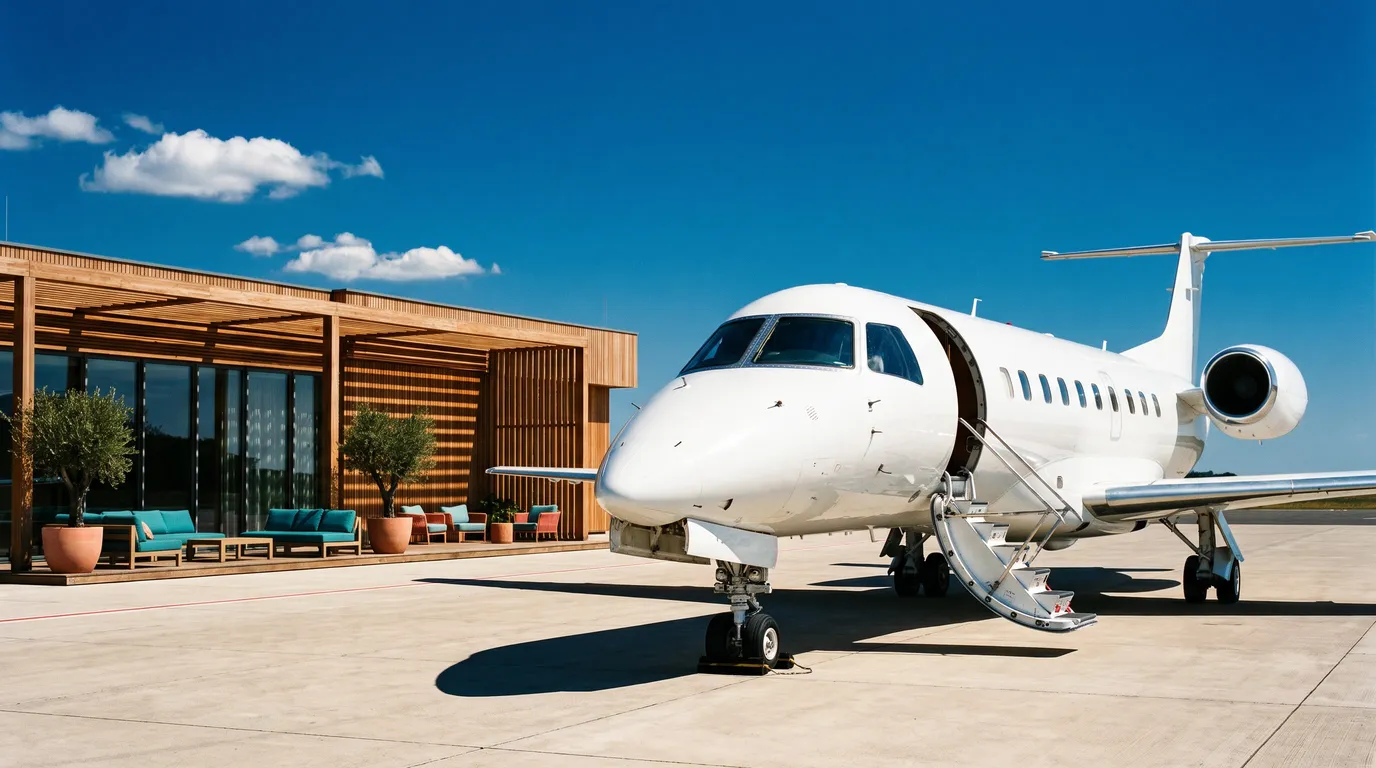
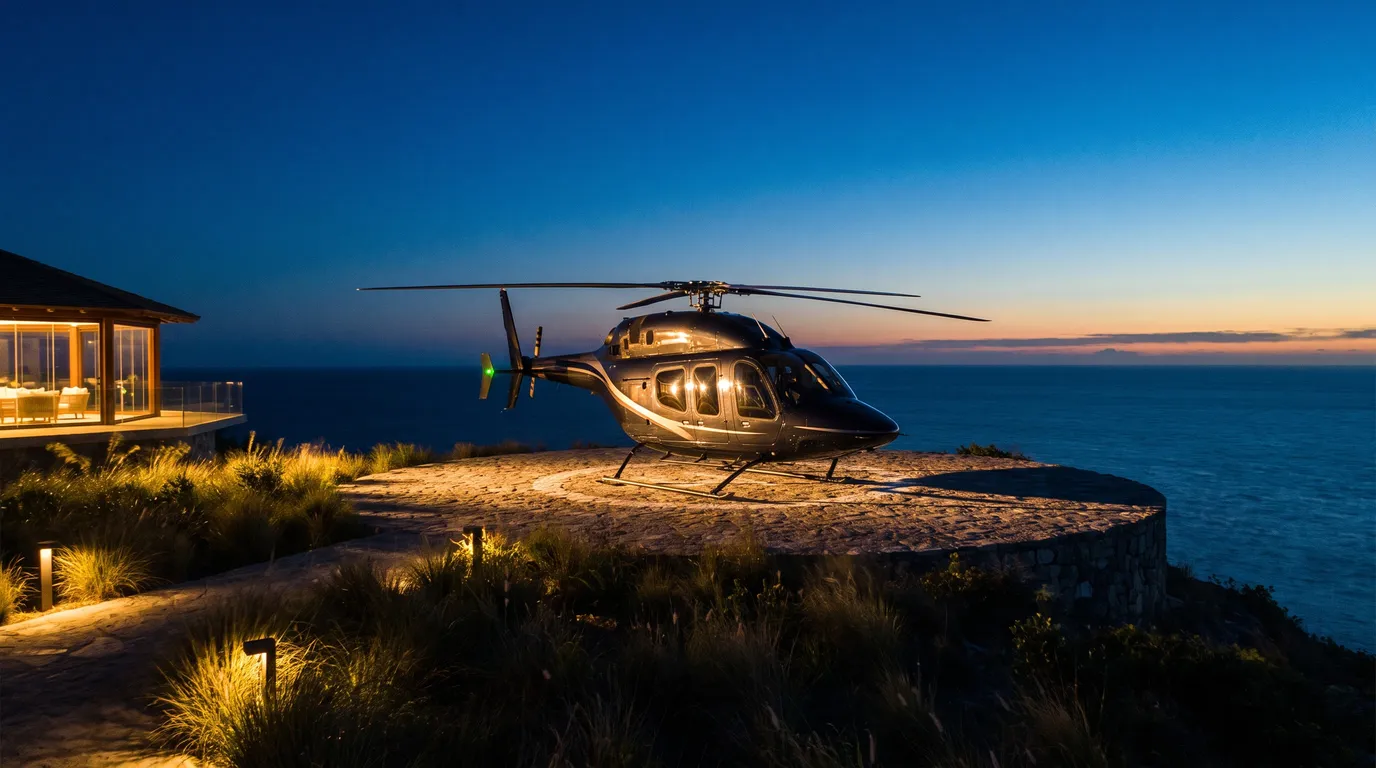
Helicopter charter marketing sells something no other premium travel product can: a door-to-destination hop that turns a three-hour drive into a twenty-minute flight. That promise is easy to admire and hard to market. Demand is seasonal, local to a handful of routes and landing sites, and split between very different buyers: a private jet passenger who needs the last leg to an island or a ski town, a family heading to a coastal second home, a corporate team visiting remote sites, a wedding planner, a film crew. Each of them searches, compares and books differently, and each has a different value over a season. This guide explains how helicopter charter marketing works in 2026: who the profitable customers are, which channels pay back, which rules shape the copy, what bookings tend to cost and how to measure results by route and by customer rather than by click.
What makes helicopter charter marketing different from jet charter marketing?
Jet charter is a national, often broker-driven market. Helicopter charter behaves more like a local luxury service with an aviation license attached. Four traits shape the plan.
- Geography is the product. A helicopter operator sells a radius, a set of helipads and a list of popular routes. Media that reaches people outside the routes the operator actually flies wastes money, so planning starts with a map, not an audience list.
- Seasonality is extreme. Summer coastal weekends, ski season, major sporting and racing events and holiday travel can account for most annual revenue. Media has to be timed to booking windows, which open weeks before the peak, not during it.
- Most revenue is repeat revenue. A household that flies to its second home every Friday in summer is worth many times a one-off sightseeing booking. Marketing should be judged on season value, not first booking cost.
- Partners control much of the demand. Jet operators, FBOs, hotels, private clubs, concierge services and travel advisors route customers to helicopter operators. Partner marketing often outperforms paid media for the first leg of growth.
For whole-aircraft jet operators the playbook differs; see our guide to private jet charter marketing and the private aviation advertising page for how Stillwater approaches the wider category.
Who are the most valuable helicopter charter customers?
| Segment | Typical use | Season value | What the ad should show |
|---|---|---|---|
| Second-home households | Weekend shuttles to coastal or mountain homes | Very high; repeat flights all season | Time reclaimed every weekend, pets and luggage, simple booking |
| Private jet passengers | Last-leg connections from a jet airport to a resort or island | High; often booked by a jet operator or assistant | Seamless transfer from jet to helicopter on the same apron |
| Corporate and project teams | Site visits, executive transport, board travel | Medium to high; contract potential | Reliability, safety culture, invoicing and account management |
| Events and celebrations | Weddings, racing, golf, festivals | Medium; one-off but high ticket | Event-timed schedules, limited slots, planner-friendly packages |
| Sightseeing and experiences | Tours and special-occasion flights | Low to medium; volume business | Views, duration, clear pricing, gift options |
The first two segments usually drive profit. A plan that chases cheap sightseeing bookings can look efficient on cost per booking while starving the routes that carry the business. For more on finding the people behind the first segment, see how to reach private jet owners with advertising.
Which channels work for helicopter charter marketing?
Is search still the backbone of helicopter charter marketing?
Yes. People type routes, destinations and occasions: "helicopter to [destination]", "helicopter transfer from [airport]", "private helicopter charter near me". An operator that covers its own routes, its brand name and its landing sites in search captures most of the high-intent demand. Two refinements matter:
- Route landing pages. Each route deserves its own page with flight time, aircraft type, luggage limits, pricing guidance and a booking form. Sending search traffic to a generic home page loses many bookings.
- Season-aware bidding. Raise bids and budgets four to eight weeks before peak weekends, when households plan, and reduce them during the peak, when most capacity is already sold.
Where does connected TV fit?
Household CTV on premium streaming apps, limited to the zip codes of target households and filtered by home value, income and travel behavior, explains the product to people who have never considered a helicopter for a weekly trip. A 15- or 30-second spot that shows the drive replaced by a short flight is the clearest way to sell the time saved. CTV is the right tool for pre-season awareness in the origin markets, not for in-season fill. Our analysis of how long CTV advertising takes to work explains why it needs six to ten weeks before bookings respond, which is exactly why it belongs in the spring plan for a summer season.
What role do paid social and programmatic play?
- Meta and Instagram carry route launches, event packages and limited-slot weekends well, especially to second-home owners.
- Programmatic display and video retarget route-page visitors and reach affluent households in origin markets through private marketplace deals on premium travel, finance and lifestyle publishers.
- LinkedIn suits corporate and project travel programs.
Should helicopter operators invest in partnerships and DOOH?
Often more than in any single paid channel. Co-marketing with jet operators, FBOs, luxury hotels, private clubs and concierge services places the operator in front of buyers at the moment they plan a trip. Digital out-of-home in private terminals and premium airport lounges reaches jet passengers in the exact moment they think about the final leg. Our guide to luxury yacht charter marketing shows the same partner-first logic in another charter market.
What rules shape helicopter charter marketing copy?
Aviation advertising is regulated, and the rules affect both copy and who may sell the flight.
- Operator versus broker. Under the Department of Transportation's air charter broker rule, 14 CFR 295.23, a company that arranges flights but does not hold operational control must state clearly in its advertising and solicitation materials, including web pages, that it is a broker and not the operator. Operators should name the certificated carrier; brokers must not imply they fly the aircraft.
- Certification. Commercial helicopter charter in the United States generally runs under Part 135, and the FAA's Part 135 certification guidance sets out who may carry passengers for hire. Ads should never imply a flight is operated under a certificate it is not.
- Air tours. Sightseeing flights fall under 14 CFR Part 136, with additional requirements for commercial air tours. Tour products and transfer products should be marketed separately so the rules for each are clear.
- Safety claims. Statements such as "safest operator" need verifiable support. Safety audits and ratings can be cited only where the operator holds them and the rating body allows the use.
- Pricing. Show what the price includes and excludes (per aircraft or per seat, fuel, landing fees, taxes, repositioning). The Department of Transportation's aviation consumer protection guidance is the reference for fair and complete price communication.
This is not legal advice; aviation counsel should review new campaigns, especially broker and pricing language.
How much does helicopter charter marketing cost?
The figures below are Stillwater planning ranges for a regional operator with an established route network. They are not published industry benchmarks and vary by market, season, fleet and brand strength.
| Metric | Stillwater planning range | Notes |
|---|---|---|
| Pre-season media budget (8 to 12 weeks) | $40,000 to $200,000 | CTV, social and search in origin markets |
| In-season monthly budget | $15,000 to $80,000 | Mostly search, retargeting and partner programs |
| Premium CTV CPM (household-targeted) | $35 to $70 | Higher for tight geographies and private marketplace deals |
| Search cost per click on route terms | $3 to $18 | Higher near major event weekends |
| Cost per first booking (transfers) | $250 to $1,200 | Before repeat value |
| Cost per first booking (tours) | $40 to $180 | High volume, low season value |
| Season value of a second-home household | $15,000 to $120,000 | Driven by flight frequency and aircraft type |
The useful number is the ratio between cost per first booking and season value. A $900 cost to win a household that books twenty round trips is a bargain; a $60 tour booking with no repeat may not cover its share of overhead. Our private aviation customer acquisition cost benchmarks cover the wider aviation picture.
What creative works best in helicopter charter marketing?
Creative has one job: make the time saved feel real and the experience feel calm. Four principles hold across channels.
- Show the comparison, not the cockpit. A split between a long line of traffic and a short flight over coastline or mountains explains the product in two seconds. Interior shots of the aircraft matter less than the arrival.
- Show the full journey. Customers worry about the parts around the flight: where to park, how luggage works, what happens on landing. A 30-second spot or a short social video that covers curb, boarding, flight and arrival removes those doubts.
- Match creative to the segment. Second-home households want routine and ease ("every Friday, home by dinner"). Jet passengers want a seamless connection. Event travelers want certainty on a fixed date. Corporate buyers want reliability and documentation.
- Keep the brand quiet and premium. Fast cuts and loud music read like a tour operator. Measured pacing, natural sound and real landscapes signal a service for people who value discretion.
Refresh creative each season and test at least two messages, time saved and experience, in each origin market. The winning message often differs by route: long drives respond to time, short hops to the experience.
How should operators price and package for marketing?
Packaging changes how media performs. Season passes or flight banks for second-home households, published fixed prices on popular routes and event packages with limited slots all give advertising a clear offer. Opaque "request a quote" pages convert far worse for new customers, who want a price range before they reach out. Even a starting-from price per aircraft, with what it includes, lifts response.
How should helicopter operators measure marketing results?
Measurement should follow the customer, not the click.
- Track bookings by route and segment. Each booking should carry its route, aircraft, segment and source. Route-level views show where media fills capacity and where it simply buys bookings that would have come anyway.
- Measure season value by cohort. Group customers by first booking month and source and track their total flights and revenue across the season. This is the only honest way to compare a CTV-driven household with a search-driven tour buyer.
- Use holdouts for awareness media. Run pre-season CTV in some origin zip codes and hold others back, then compare route bookings and branded search between the groups. A clean holdout answers the question "did CTV work?" better than any attribution model.
- Credit partners fairly. Give partners unique booking links or codes so partner-driven bookings are not credited to paid search after the customer looks up the operator's name.
What are the most common helicopter charter marketing mistakes?
- Selling the aircraft instead of the time. Spec sheets interest pilots; customers buy the hours they get back.
- Treating tours and transfers as one product. They have different buyers, rules, prices and season value. Mixed campaigns blur both.
- Spending during the peak instead of before it. By the time peak weekends arrive, most households have already booked. Pre-season media drives the season.
- Ignoring the broker disclosure rule. Brokers that blur who operates the flight risk enforcement and customer trust.
- Judging media on cost per booking alone. The cheapest bookings are often the least valuable.
- Weak route pages. Without flight time, luggage rules and price guidance, high-intent searchers bounce to the operator that shows them.
What does a helicopter charter marketing plan look like across a season?
- Twelve to eight weeks before peak: launch household CTV and YouTube in origin markets with a holdout group, refresh route pages, open partner programs with jet operators, FBOs, hotels and clubs, and send early-booking offers to past customers.
- Eight weeks to the peak: add route search at full coverage, paid social for limited-slot weekends and event packages, and programmatic retargeting of route-page visitors.
- During the peak: cut awareness spend, keep search and retargeting for open capacity, and fill empty legs with targeted offers to past customers.
- After the season: read cohort value and the CTV holdout, re-rank routes and segments, and set the next season's budget split.
Operators with year-round routes or corporate contracts can run a lighter version of this cycle each quarter.
Ready to build a helicopter charter marketing program?
Stillwater Media plans and buys premium CTV, YouTube Select, programmatic, streaming audio, DOOH and social for private aviation and other high-consideration brands, and counts aviation brands such as JetLinx and FLY Exclusive among its clients. We take on a limited number of engagements each quarter and build every program around private marketplace inventory, affluent audience engineering, brand safety and incrementality testing. Apply to work with Stillwater Media.
About the author: Stillwater Media is a selective performance media agency for luxury and high-consideration brands. Signal. Strategy. Scale.
Frequently Asked Questions
What is helicopter charter marketing?
It is the paid media, partner and CRM work helicopter operators use to fill routes and flight hours with high-value customers. The best programs focus on time saved on specific routes and on repeat customers rather than one-off tour bookings.
Who are the best customers for helicopter charter?
Second-home households flying the same routes every weekend and private jet passengers needing a last-leg transfer usually carry the most value. Corporate teams and event travelers are valuable secondary segments, while sightseeing tours are a lower-value volume business.
Which channels work best for helicopter charter advertising?
Route-level search captures demand, while household CTV in origin markets builds awareness before the season. Partner programs with jet operators, FBOs, hotels and clubs, plus paid social, retargeting and CRM, fill specific weekends.
What rules apply to helicopter charter advertising?
Air charter brokers must state clearly in ads and on web pages that they are brokers and not the operator under 14 CFR 295.23. Operators should name the certificated carrier, support any safety claims and show what prices include.
How much does helicopter charter marketing cost?
As Stillwater planning ranges, a pre-season push often runs $40,000 to $200,000 over eight to twelve weeks. Cost per first transfer booking commonly falls between $250 and $1,200, which pays back through repeat flights across the season.