CTV ad production cost for luxury brands is the question that stalls more streaming tests than media price ever does. A marketing team approves a CTV test budget, then learns that the spot itself might cost as much as the first month of media, and the plan goes back on the shelf. That reaction is understandable, but it usually rests on the wrong assumption: that a luxury brand needs a broadcast-scale commercial to appear on Disney+, Netflix or Prime Video.
It does not. Streaming TV rewards creative that is beautiful, clear and well suited to the screen, and those qualities depend more on planning than on crew size. This guide breaks down what CTV ad production costs for luxury brands at each tier, where the money actually goes, how to judge whether a production budget is proportionate to your media budget, and the mistakes that inflate costs without improving results.
How much does CTV ad production cost for luxury brands?
Published estimates vary enormously because "a commercial" can mean anything from edited stock footage to a multi-day shoot with talent, permits and color grading. Industry guides currently put a professionally produced 30-second spot anywhere from a few thousand dollars to well over $500,000, with national network-standard creative often quoted at $50,000 to $500,000; Mountain's 2026 TV advertising cost guide summarizes the common ranges, and production firms quote similar spreads.
For luxury and high-consideration brands buying streaming inventory, we see costs cluster into four tiers. These are Stillwater planning ranges for a 30-second spot with a 15-second cutdown, based on projects we have scoped and reviewed; your figures will vary with location, talent and rights.
| Production tier | Typical approach | Stillwater planning range | Best fit |
|---|---|---|---|
| Adapted assets | Recut existing brand film, photography and product footage; new motion graphics, voiceover and sound mix | $8,000-$30,000 | First CTV test; brands with a strong asset library |
| Lean original shoot | One-day shoot, small crew of 6-10, one or two locations, no on-camera talent or non-union talent | $35,000-$90,000 | Most luxury brands launching a CTV program |
| Premium original shoot | Two to three shoot days, larger crew, aerial or specialty camera work, multiple locations, professional color and finishing | $100,000-$300,000 | Established programs scaling streaming spend |
| Flagship brand film | Director-led campaign, union talent, travel, extensive post-production, multiple versions | $300,000-$1,000,000+ | Brand relaunches; national campaigns across channels |
Most luxury brands entering streaming should sit in the first two tiers. The goal of a first CTV flight is to learn which audiences, publishers and messages drive branded search, site visits and revenue, and that learning needs good creative, not the most expensive creative.
Where does the money go in CTV ad production cost for luxury brands?
Understanding the cost structure helps you see which line items move quality and which only move the invoice. For a lean original shoot, a typical breakdown looks like this (Stillwater planning range, share of total production budget):
- Pre-production (10%-15%): creative development, scripting, storyboards, location scouting, casting and shot lists. Underinvesting here is the most expensive mistake in production.
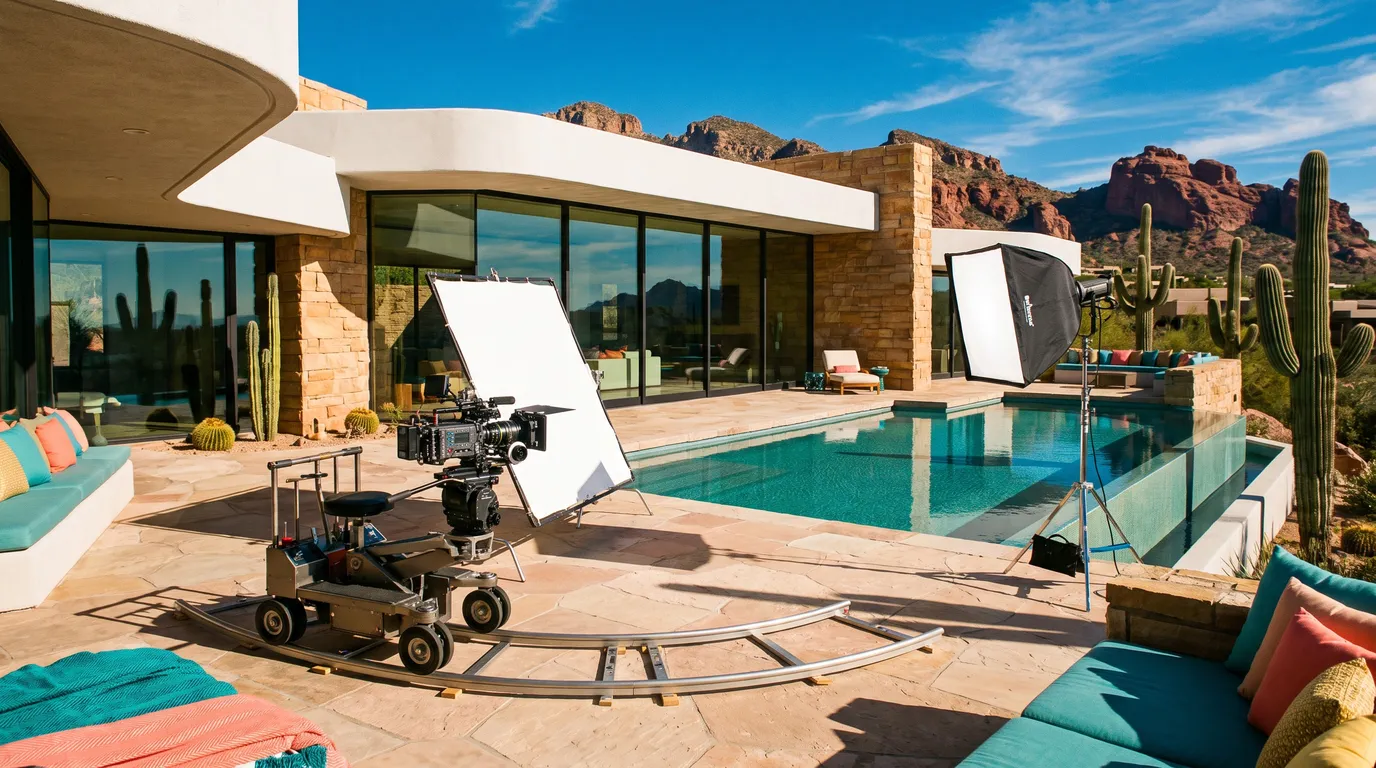
- Crew and equipment (30%-40%): director, director of photography, camera and lighting team, grip, sound, gear rental. Industry guides commonly quote $8,000 to $18,000 per day for an 8-12 person crew.
- Location and logistics (10%-20%): fees, permits, insurance, transport and catering. Shooting at a client property, a dealership or a hotel partner often reduces this line.
- Talent and usage (0%-20%): on-camera talent, voiceover and the usage rights that govern where and how long the spot can run.
- Post-production (20%-30%): editing, color grading, sound design and mix, motion graphics, versioning and delivery files.
Luxury categories have two cost drivers that mass-market brands do not. Product handling (a watch macro, a jet interior, an estate at golden hour) demands specialty lenses, lighting and time. And brand standards require more finishing time, because a soft focus pull or a muddy grade looks worse beside premium streaming content than it would on social.
How much should you spend on production relative to media?
A simple proportionality check prevents both under- and over-spending. These are Stillwater planning ratios for production cost as a share of the first 12 months of planned CTV media.
| Planned 12-month CTV media | Suggested production share | Implied production budget |
|---|---|---|
| $150,000-$300,000 | 10%-20% | $15,000-$60,000 |
| $300,000-$750,000 | 8%-15% | $30,000-$110,000 |
| $750,000-$2,000,000 | 6%-12% | $60,000-$240,000 |
| $2,000,000+ | 4%-10% | $120,000+ |
If production would exceed roughly 25% of first-year media, the plan is usually unbalanced: either the media budget is too small to learn from, or the shoot is overbuilt for the test. Our guide to CTV test budgets for high AOV brands covers how to size the media side, and our breakdown of CTV advertising cost and CPM benchmarks shows what that media buys.
What makes luxury CTV creative work on the big screen?
Production money is best spent on the elements that matter most when a spot plays on a 65-inch living-room screen next to premium programming.
Is image quality more important than story?
Both matter, but the screen exposes image quality quickly. Shoot in at least 4K, light the product properly and budget for color grading. A simple, well-lit sequence will outperform an ambitious concept that looks underfunded.
How long should a luxury CTV spot be?
Most streaming inventory runs 15- and 30-second units, and many premium publishers favor them. Plan the shoot to deliver both from the start. Our analysis of CTV ad length for luxury brands explains when a 60-second version earns its place.
Does the spot need a call to action?
Yes, but a quiet one. Streaming viewers cannot click, so the job is to make the brand memorable and searchable. A clear brand name, a simple web address and a reason to look you up do more than a QR code crowding a beautiful frame, though QR codes can work for categories with a direct next step.
Should audio get its own budget?
Absolutely. Most CTV ads play with sound on, through living-room speakers. Licensed or original music, a refined voiceover and a professional mix are among the highest-return line items in the budget.
How can you lower CTV ad production cost for luxury brands without looking cheap?
Lowering cost is mostly about planning and reuse, not cutting corners.
- Shoot for a system, not a single spot. Capture enough footage for a 30, two 15s, several 6-second bumpers and social cutdowns. Additional versions from the same shoot cost a fraction of a new production and solve the creative wear-out problem before it starts.
- Use the assets you already own. Many luxury brands have years of brand film, drone footage and photography. A skilled editor and motion designer can turn that library into a strong first CTV spot.
- Shoot where you already have access. Your own showroom, aircraft, property or partner venue removes location fees and reduces permits.
- Avoid unnecessary talent. Product, place and craft often tell a luxury story better than actors. If you do use talent, negotiate usage terms that match your media plan; the SAG-AFTRA 2025 commercials contracts govern union talent fees and usage periods.
- Lock the script before the shoot. Changes on set are the fastest way to add crew hours and overtime.
- Build versioning into the brief. Plan variations by audience or vertical (for example a wealth-management message and a private-club message) so you can test messages without reshooting.
How long does a luxury CTV production take?
Timelines affect cost as much as crew size does. Rushed productions pay for overtime, expedited equipment, premium editing hours and compromises that show on screen. These are Stillwater planning ranges from brief to delivered files.
| Production tier | Pre-production | Shoot | Post-production and delivery | Total elapsed time |
|---|---|---|---|---|
| Adapted assets | 1-2 weeks | None | 2-3 weeks | 3-5 weeks |
| Lean original shoot | 2-4 weeks | 1 day | 3-4 weeks | 6-9 weeks |
| Premium original shoot | 4-6 weeks | 2-3 days | 4-6 weeks | 10-14 weeks |
| Flagship brand film | 6-10 weeks | 3+ days | 6-10 weeks | 4-6 months |
Work backward from the flight date. If a CTV test needs to start in a specific season (for example ahead of a peak travel, membership or model-year window), the brief should be approved at least two months earlier for a lean shoot. Building in approval time for legal review, brand standards and publisher standards prevents the most common cause of late launches: a finished spot waiting in a queue while the media plan sits idle.
Seasonality matters for location work too. Golden-hour exteriors, coastal properties, mountain resorts and golf venues all have windows when light, weather and access are best, and missing them can push a shoot by months. When a seasonal window is tight, adapting existing assets for the first flight and scheduling an original shoot for the following quarter is often the smarter sequence: you start learning sooner, and the second spot benefits from what the first one teaches.
What technical specs do streaming publishers require?
Delivery requirements are a hidden cost when they are discovered late. Most premium publishers and ad servers require high-resolution files (typically 1920x1080 or higher), specific frame rates, broadcast-safe audio loudness and clean slates without burned-in tracking elements. Industry standards bodies publish common baselines; the IAB Tech Lab digital video ad format guidelines are a useful reference. Ask your media partner for the exact delivery specs of every publisher in the plan before post-production begins, and budget a few hours of finishing time for each delivery variant.
Some premium publishers also run creative approval or standards review, especially for regulated categories such as financial services. Leave one to two weeks in the schedule for approvals.
What mistakes inflate CTV ad production cost for luxury brands?
These are the errors that most often add cost or weaken performance.
- Overbuilding the first spot. A flagship film for a first test locks budget into one message before you know what works.
- Repurposing social video without adaptation. Vertical, fast-cut, caption-heavy social creative looks out of place on a television screen.
- Skipping pre-production. A loose brief produces a long shoot, a long edit and a spot that tries to say too much.
- Forgetting cutdowns and versions. Running one 30-second spot for six months guarantees fatigue and wastes the shoot.
- Underfunding sound. A cinematic image with a thin, generic track undermines the premium impression.
- Ignoring usage rights. Music and talent licenses that expire mid-campaign force expensive renegotiation or early pulls.
- Measuring the creative by views alone. Judge the spot on branded search lift, site engagement and revenue outcomes, not completion rate alone; CTV completion rates are high by design.
How should you measure whether the production investment paid off?
Creative quality shows up in business outcomes. Track branded search volume in exposed regions against control regions, site visits from CTV-exposed households, and CRM-verified revenue over the full sales cycle. Comparing two or three creative versions in rotation within the same flight shows which message earns its keep; our guide to creative sequencing for CTV advertising explains how to structure that test.
Production spending is justified when it improves those outcomes. A $40,000 spot that lifts branded search and drives qualified site visits is a better investment than a $400,000 film that cannot be tested, versioned or refreshed.
Ready to launch CTV creative that matches your brand?
Stillwater Media plans premium CTV programs for luxury and high-consideration brands, from creative scoping and production partner selection to publisher-direct buying on Disney+, Netflix, Prime Video and other premium inventory, measured with incrementality testing. We work with a limited number of brands each quarter. If your customers are worth more than $5,000 and you want streaming that pays for itself, apply to work with Stillwater Media.
About the author: Stillwater Media is a selective performance media agency for luxury and high-consideration brands, headquartered in Charlotte, North Carolina, and serving clients nationally and internationally. Signal. Strategy. Scale.
Frequently Asked Questions
How much does CTV ad production cost for luxury brands?
As Stillwater planning ranges, adapting existing assets costs about $8,000 to $30,000, a lean one-day original shoot $35,000 to $90,000 and a premium multi-day shoot $100,000 to $300,000. Flagship brand films can exceed $1,000,000.
How much should I spend on production compared with CTV media?
A Stillwater planning guide is 10% to 20% of first-year media for programs under $300,000, falling to 4% to 10% above $2,000,000. If production would exceed about 25% of first-year media, the plan is usually unbalanced.
Can I use my social video ads on CTV?
Usually not without adaptation. Vertical, fast-cut, caption-heavy social creative looks out of place on a television screen, so recut it in 16:9 with a proper sound mix and finishing to meet publisher specs.
How can luxury brands reduce CTV production costs?
Shoot for a system of versions rather than one spot, reuse existing brand footage, film at locations you already control and lock the script before the shoot. These steps lower cost without lowering quality.
What is the biggest CTV production mistake?
Overbuilding the first spot. A flagship film for a first test locks the budget into a single message before you know which audiences, publishers and messages drive results.