
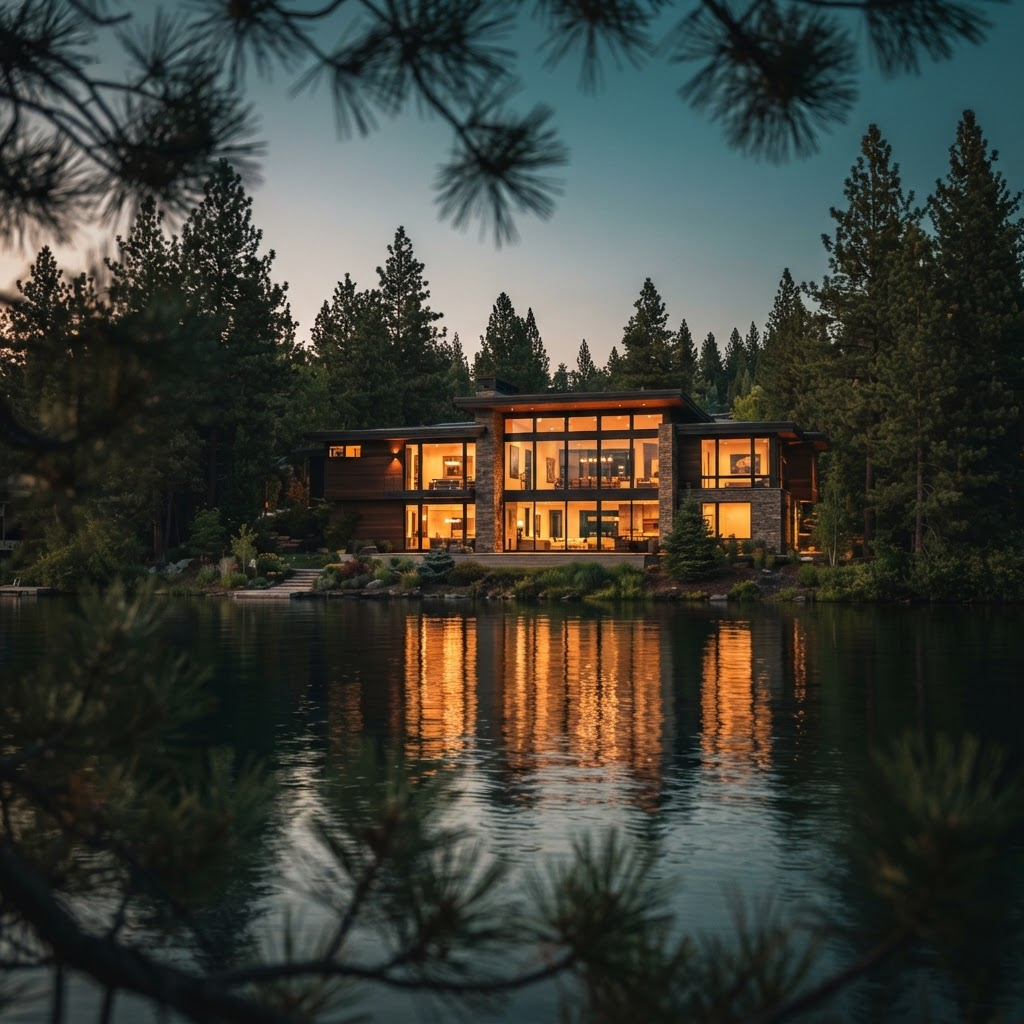
Second-Home Advertising for Affluent Buyers: Reaching the Multi-Home Vacation Property Buyer
Second-home advertising for affluent buyers is a different discipline than primary-residence real estate marketing, and developers, resort communities and luxury brokerages that run the same playbook against both audiences consistently under-perform. US Census Bureau American Community Survey data has put the national second-home count at somewhere between 5.5 million and 7.5 million properties in recent years, concentrated heavily in coastal, lake, mountain and golf-community markets, and the buyer behind those numbers looks nothing like a relocating primary-home shopper. Second-home buyers dream for years before they search, they are frequently comparing three or four different destination categories rather than three or four listings, and a meaningful share are already homeowners elsewhere being reached far outside the market where the property sits. A media plan built for local, in-market intent misses most of that audience entirely.
This is also a category Stillwater treats as adjacent to, but distinct from, primary luxury real estate and from single-destination categories like mountain and ski real estate. The audience-sizing, origin-market and seasonality mechanics below apply across coastal, lake, golf-community and desert second-home markets, and they matter because the second-home buyer's discovery phase — the two to five years before an inquiry — is where most developers and brokerages currently spend nothing at all.
How the Second-Home Buyer Differs From the Primary-Residence Buyer
The primary-residence buyer is usually reacting to a trigger — a job change, a growing family, a lease ending — on a compressed timeline of weeks to a few months. The second-home buyer is different on nearly every dimension that matters to a media plan.
- Timeline. Primary-home searches typically resolve in 30 to 90 days once serious search begins; second-home purchases are frequently preceded by two to five years of casual browsing, repeat vacation visits to a region, and informal comparison of two or three destination types before a specific search even starts.
- Financing. A substantial share of second-home purchases in the $750,000-plus tier are cash or largely cash, with financing decisions driven by tax and estate planning rather than affordability.
- Motivation mix. Primary-home buyers optimize for daily-life logistics. Second-home buyers are optimizing for some combination of lifestyle and family gathering space, a hedge or diversification asset, a future retirement plan, and — increasingly — short-term rental income potential that partially offsets carrying costs.
- Geography of the buyer versus the property. The buyer usually does not live anywhere near the property. A coastal Florida second-home market draws disproportionately from the Northeast and Midwest; a mountain lake market draws from the nearest three or four major metros; a desert golf community draws from cold-weather metros nationally. Advertising has to be built around the buyer's origin market, not the property's location.
- Repeat and expansion behavior. A meaningful share of second-home buyers already own one second home and are adding or trading up to a second or third property, which makes prior second-home ownership one of the strongest available targeting signals.
Segmenting the Second-Home Market by Property Type
Second-home buyers are not one audience; the motivation, price band and seasonality shift substantially by property type, and the media plan should shift with them.
| Property type | Typical price band | Primary buyer motivation | Peak seasonality |
|---|---|---|---|
| Coastal / beach | $850,000 to $4M+ | Family gathering, rental income, climate/lifestyle | Intent peaks fall through late winter, ahead of spring closings |
| Lake | $600,000 to $3M | Multi-generational gathering, boating lifestyle | Intent peaks late spring through midsummer |
| Mountain / ski | $900,000 to $5M+ | Recreation access, appreciation, seasonal rental income | Intent peaks late summer through early winter, ahead of ski season |
| Golf & country club community | $700,000 to $3.5M | Amenity access, retirement planning, social community | Intent peaks late winter through spring |
| Desert / warm-winter retirement | $500,000 to $2.5M | Seasonal (snowbird) living, retirement transition | Intent peaks September through January |
| Urban pied-à-terre | $600,000 to $4M+ | Work travel, cultural access, adult-child proximity | Relatively flat, modest Q4 peak |
| International (Caribbean, Mexico, Europe) | $700,000 to $6M+ | Lifestyle, currency/estate diversification, retirement | Intent peaks Q4 through Q1 |
A brokerage or developer selling across more than one of these categories should be running effectively separate audience builds and flight calendars per category, not one blended real estate campaign, because the buyer psychology and the timing are genuinely different.
Building the Second-Home Buyer Audience
The signal sources that build an effective second-home audience are different from the ones used for primary-residence real estate, because the target is not "in-market home shoppers in this ZIP code" but "affluent households elsewhere with the profile and life stage of a second-home buyer."
| Audience layer | Signal sources | Fit for |
|---|---|---|
| Existing multi-property owners | Property and tax-record data showing ownership of two or more residential properties | Trade-up and expansion buyers, the highest-intent segment available |
| Origin-market affluent households | Wealth-modeled income and net-worth segments in the metros that historically feed the destination (e.g., Northeast and Midwest for Sunbelt coastal, nearest major metros for lake and mountain markets) | Broad-reach prospecting matched to the destination's actual feeder geography |
| Life-stage triggers | Empty-nest household composition, proximity to typical retirement age, recent primary-home sale or liquidity event indicators | Timing overlay to prioritize households entering the window where second-home decisions are made |
| Travel and rental behavior | Vacation rental platform booking patterns in the destination region (as a proxy for prior visits and affinity), airline and resort loyalty program overlaps where available | Warm audience of people already spending discretionary time in the destination category |
| Content and search engagement | Engagement with destination-specific real estate content, second-home and vacation-property editorial, relocation and retirement-planning content | Mid-funnel nurture audience actively in the consideration phase |
| First-party inquiry and tour data | Developer or brokerage CRM: past inquiries, model-home visits, sales-gallery registrations | Retargeting and sequencing into the close |
The core build for most developers is the first three layers, filtered by a wealth overlay appropriate to the price band, extended by the fourth and fifth layers for reach during the long dream phase, and sequenced against the sixth for closing. Because the buyer lives outside the destination market, this audience is built and bought nationally or across a defined set of feeder metros — not geo-fenced to the property's ZIP code, which is the single most common targeting mistake in the category.
Seasonality: Flighting Against the Second-Home Buying Calendar
Second-home intent is seasonal and the seasonality is specific to property type, as the table above shows directionally. The practical flighting discipline has two layers. First, a low-level always-on presence in owned and first-party channels throughout the year, since the two-to-five-year dream phase means someone is always entering consideration. Second, a meaningfully larger flight 60 to 120 days ahead of each property type's peak intent window, timed so that heavier media coincides with the season when browsing turns into scheduled tours and offers. A ski-real-estate developer, for example, should be building reach through the summer and pushing hard from late August through November, ahead of both ski season itself and the psychological trigger of the first cold snap in the buyer's home market.
Channel Mix for Second-Home and Vacation Property Advertising
| Channel | Role | Audience layer | CPM range | Share of media | Notes |
|---|---|---|---|---|---|
| Premium CTV, geo-targeted to feeder metros | Lifestyle storytelling and reach in the dream phase | Origin-market affluent households, wealth overlay | $35 to $58 | 30% to 35% | Run in the buyer's home market, not the destination; 30s lifestyle creative outperforms spec-driven units |
| Programmatic native (real estate, travel and lifestyle premium publishers) | Mid-funnel nurture and property storytelling | Content/search engagement layer, multi-property owners | $12 to $28 | 15% to 20% | Long-form community and lifestyle features outperform listing-style units for this audience |
| DOOH near private aviation terminals, marinas and premium airports serving the destination | Reinforcement at moments of physical proximity or travel intent | Event/travel-behavior layer, geo | $20 to $42 | 8% to 12% | Highest relevance in the 60 days before peak season |
| Streaming audio and podcasts (business, travel, retirement-planning shows) | Authority and consideration-stage reinforcement | Origin-market affluent, life-stage triggers | $22 to $40 | 8% to 12% | Host-read spots on retirement and wealth-adjacent shows perform strongly for the desert/golf and international segments |
| Paid search (destination-plus-property-type terms, builder/community brand terms) | Capture manufactured intent | All layers, in-market intent | CPC $3 to $22 | 12% to 18% | Spikes align with the seasonal windows in the property-type table |
| Paid social to matched multi-property-owner and CRM lookalikes | Retargeting and expansion-buyer prospecting | First-party and multi-property layers | $10 to $24 | 8% to 12% | Avoid broad "home shopper" interest targeting, which reaches primary-residence buyers almost exclusively |
| Direct mail and email to first-party CRM | Nurture and tour scheduling | First-party inquiry layer | N/A (CPM not applicable) | 5% to 8% | Still the highest-converting channel post-inquiry for this category; do not let digital budget crowd it out |
Cost Benchmarks: What Second-Home Advertising for Affluent Buyers Should Deliver
| Property type / business | Primary conversion | Cost per conversion range | Conversion value | Cycle length |
|---|---|---|---|---|
| Coastal / lake developer | Qualified sales-gallery visit or model-home tour | $350 to $1,100 | $850K to $4M property, 4-8% commission or margin | 6 to 24 months |
| Mountain / ski developer | Qualified inquiry or on-site visit | $400 to $1,300 | $900K to $5M+ property | 9 to 30 months |
| Golf & country club community | Qualified inquiry, membership tour | $300 to $950 | $700K to $3.5M property plus membership initiation | 6 to 18 months |
| Luxury brokerage (resale, multiple destinations) | Qualified buyer lead | $250 to $800 | $15K to $60K commission per closed transaction | 6 to 24 months |
| International property marketer | Qualified inquiry | $450 to $1,500 | $700K to $6M+ property | 12 to 36 months |
These ranges assume the audience is built from the layers above rather than broad geo-targeted real estate segments; broad targeting typically produces a lower cost per lead and a dramatically worse cost per qualified, financially-capable inquiry, since most of the volume comes from primary-residence shoppers who are not in the second-home market at all.
Creative Direction for Second-Home and Vacation Property Marketing
The category's default creative — floor plans, square footage and amenity lists — speaks to the tour-scheduling stage of the funnel and almost nowhere else. For the two-to-five-year dream phase that makes up most of the audience's time in consideration, creative should sell the life being purchased: multi-generational gathering, the specific rhythm of a season in that location, the rental-income optionality for buyers weighing carrying costs. Testimonial and owner-story formats — an existing owner describing why they bought and how the property gets used — consistently outperform architectural or amenity-led creative for this audience, because the second-home decision is emotional and social before it is financial. Reserve spec-driven, floor-plan and pricing creative for the retargeting and nurture sequence aimed at households that have already inquired or toured, where the decision has moved from "should I buy in this category" to "should I buy this specific property."
Measuring Second-Home and Vacation Property Campaigns
Conversion volume in this category is low and individual conversion value is high, which calls for the same holdout-based measurement discipline used across Stillwater's other long-cycle verticals. Because the buyer lives outside the destination market, the holdout should be built at the origin-metro or origin-audience level rather than geographically around the property, with 20 to 25 percent of the target audience held out of exposure and CRM-matched inquiries, tours and closings compared between exposed and holdout groups. Given cycle lengths that frequently run past 12 months, the practical approach is a rolling read at the inquiry and tour stage, validated periodically against actual closings, rather than waiting a full cycle for every cohort to resolve before drawing any conclusion.
Common Mistakes in Second-Home Advertising for Affluent Buyers
- Geo-fencing media to the property's ZIP code. The buyer lives elsewhere; local targeting misses the majority of the addressable audience.
- Running one campaign across multiple property types. A coastal buyer, a ski buyer and a golf-community buyer have different motivations and different seasonal windows; blending them dilutes all three.
- Leading with floor plans and square footage in top-of-funnel creative. This speaks to buyers already deep in consideration and does nothing for the two-to-five-year dream phase where most of the audience sits.
- Ignoring existing multi-property owners as a targetable segment. They are the single highest-intent audience available and are frequently omitted from real estate audience builds entirely.
- Treating the category as always-on with no seasonal weighting. Second-home intent moves with the calendar by property type; flat year-round spend under-invests in the windows that actually convert.
- Underfunding direct mail and first-party nurture in favor of digital-only retargeting. For this buyer, a well-timed physical mailer or a personal follow-up frequently outperforms another programmatic impression once a household has inquired.
- Measuring cost per lead instead of cost per financially qualified inquiry. Broad targeting produces cheap leads that are overwhelmingly primary-residence shoppers, not second-home buyers.
How to Build a Second-Home Advertising Program for Affluent Buyers: A Sequence
- Segment the offering by property type and build a separate audience, creative track and seasonal calendar for each.
- Identify the feeder metros for each property type using existing sales and inquiry data, and confirm them against travel and rental-platform behavior in the destination.
- Build the audience from multi-property ownership records, origin-market wealth overlays, life-stage triggers and travel/content engagement signals.
- Set the seasonal flight calendar, weighting spend 60 to 120 days ahead of each property type's peak intent window while maintaining always-on reach for the multi-year dream phase.
- Produce lifestyle- and testimonial-led creative for top-of-funnel and reserve spec-driven, floor-plan creative for retargeting and post-inquiry nurture.
- Deploy premium CTV and streaming audio in the feeder metros, programmatic native for mid-funnel nurture, and geofenced DOOH near destination airports and marinas ahead of peak season.
- Route every inquiry into a first-party CRM nurture sequence that includes direct mail, not just digital retargeting.
- Set a 20 to 25 percent origin-audience holdout and match tours, inquiries and closings back to exposed versus holdout households.
- Read results at the inquiry and tour stage on a rolling basis, validate against actual closings as they occur, and reallocate budget across property types and channels based on measured incremental performance.
Where Stillwater Media Fits
Stillwater Media plans and buys premium CTV, programmatic, digital out-of-home and streaming audio for luxury real estate developers, brokerages and resort communities selling to buyers who live nowhere near the property. We build second-home audiences from ownership, origin-market and life-stage signals rather than local in-market real estate segments, we flight against each property type's actual seasonal calendar, and we measure results against an origin-audience holdout so the tours and closings we report are the ones the media produced. We take a limited number of new engagements each quarter. If your next sales cycle depends on reaching buyers outside the market where your property sits, [apply to work with us](https://stillwatermedia.io/apply).
---
*Stillwater Media is a selective performance media agency for luxury and high-consideration brands, based in Charlotte, North Carolina and working nationally. We plan and buy premium CTV, programmatic, digital out-of-home, streaming audio and YouTube Select for clients including JetLinx, W Hotels, PXG, FLY Exclusive and Financial Independence Group, and we measure everything against holdouts rather than platform-reported lift. Signal. Strategy. Scale.*