
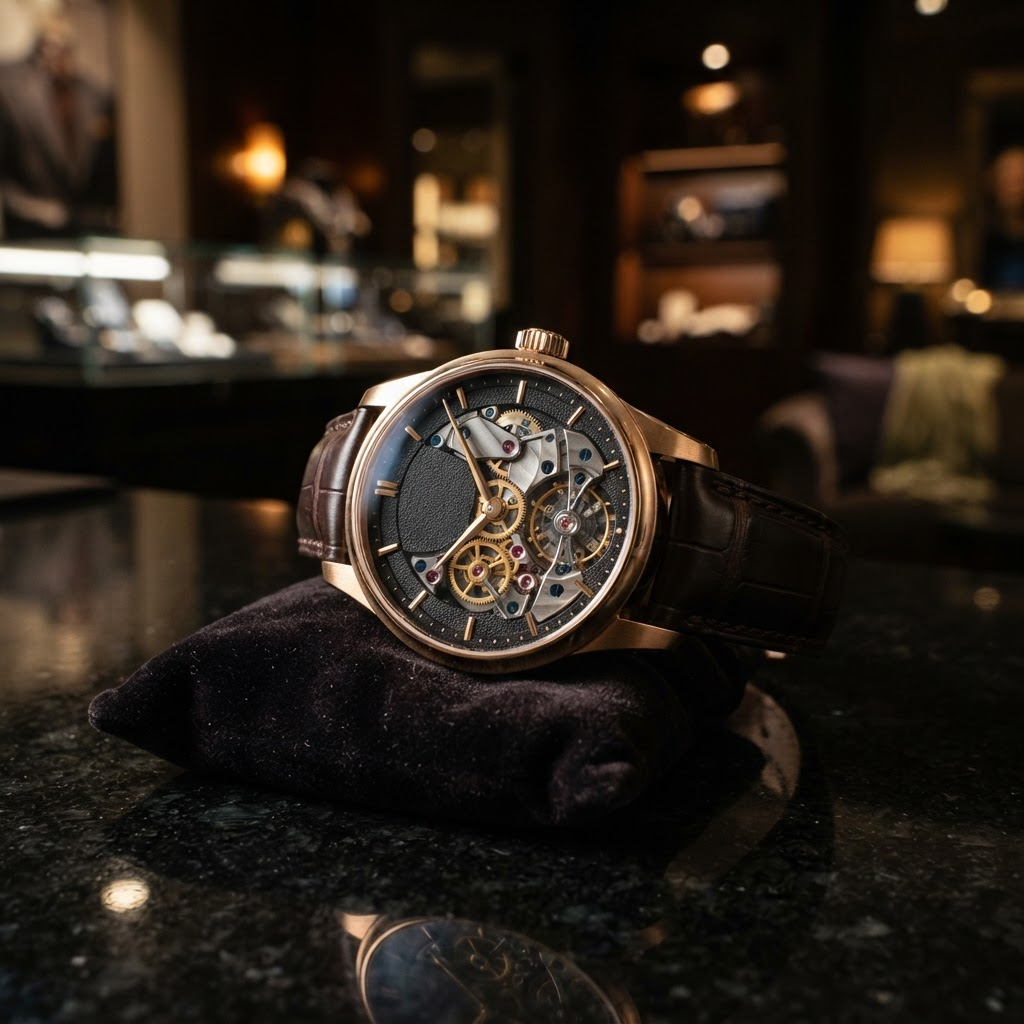
Luxury timepiece advertising digital strategy is one of the most technically demanding challenges in premium marketing. Watch brands don't sell a product - they sell provenance, craftsmanship, and identity. A Rolex isn't purchased on impulse; it's researched obsessively, compared across references, debated with peers, and ultimately chosen as an expression of who the buyer believes themselves to be. Advertising that ignores this reality - that treats a $12,000 watch like a $120 handbag - produces exactly the wrong outcome: low-quality traffic, eroded brand perception, and CAC numbers that make the business model look broken.
The good news: digital media, deployed correctly, is exceptionally well-suited to luxury timepiece marketing. The long consideration cycle that seems like a liability is actually an opportunity to build relationship, establish authority, and create desire through sequential storytelling across premium channels. The watch buyer who sees your brand on a premium CTV placement in January, encounters your editorial partnership in February, and finds your direct website through branded search in March is far more valuable than the one who clicked a Facebook retargeting ad at a moment of boredom.
This guide outlines the digital media strategy for luxury watch brands - from emerging independents to established maisons - that want to reach serious buyers without compromising the brand equity that justifies their price point.
Understanding the Luxury Watch Buyer
The luxury timepiece market segments into three meaningfully different buyer types, each requiring a distinct targeting approach:
The Collector (net worth $3M+): Owns 5–40+ watches. Makes 2–5 purchases per year. Deeply knowledgeable about movements, complications, and reference history. Motivated by rarity, historical significance, and investment value. Reads Hodinkee, A Blog to Watch, Revolution magazine. Follows auction results on Sotheby's and Phillips. Responds to editorial storytelling, horological depth, and brand heritage - not to discount offers or broad awareness placements.
The Achievement Buyer (HHI $300K–$1M+): Buying their first or second serious watch as a milestone purchase. Budget typically $5,000–$25,000. Research phase lasts 3–6 months. Motivated by peer perception, career milestone symbolism, and "buying into" a brand community. Reads GQ, Forbes, Wall Street Journal Style, watches YouTube content reviews obsessively, and relies on Reddit's r/Watches for peer validation.
The Aspirational Buyer (HHI $150K–$300K): Shopping for entry-level luxury - Tudor, TAG Heuer, Longines, entry Omega. Often converts at 12–18 months after initial brand exposure. Motivated by brand association and quality step-up from fashion watches. Converts most efficiently through remarketing and email nurture after top-of-funnel awareness.
Each of these segments requires different channel weights, different creative approaches, and different conversion metrics. Lumping them into a single campaign is the first mistake most watch brands make.
Why Mass-Market Digital Channels Underperform for Watch Brands
Before outlining what works, it's worth being specific about what doesn't - because the temptation to scale quickly through Meta, YouTube pre-roll, and open exchange programmatic is real, and the downside is severe.
Meta (Facebook/Instagram): Reaches everyone efficiently, which is precisely the problem. A $15,000 watch advertised to an algorithm-optimized audience will generate clicks from users who can't afford the product, driving down quality signals and distorting your CAC calculation. Worse, the creative environment on Meta's platform positions luxury product alongside content that undermines the exclusivity signal your pricing depends on. Meta is not without utility for watch brands - but it's a remarketing and content amplification channel, not a prospecting engine.
YouTube pre-roll (non-Select): Standard YouTube pre-roll buys put your 15-second unskippable ad in front of whatever video the algorithm serves. This means your Patek Philippe advertisement runs before a teenager's gaming livestream. The contrast actively damages brand perception. YouTube Select, by contrast, allows brands to buy against specific premium content lineups (luxury, automotive, finance) with guaranteed brand safety.
Open exchange programmatic: The same brand safety argument applies even more forcefully in programmatic. Open exchange inventory is cheap because it's undifferentiated - and luxury brands that buy it are paying for the privilege of appearing next to content that cheapens them.
The throughline: for luxury timepiece advertising, context is not incidental to performance. It is performance. A watch ad in the right environment tells a story about the brand before the creative even loads. A watch ad in the wrong environment actively tells the opposite story.
The Digital Channel Stack for Luxury Watch Brands
Connected Television: Cinematic Storytelling at Scale
CTV is the natural home for luxury watch advertising. A beautifully produced 30- or 60-second brand film - the kind of creative luxury maisons have invested in for decades in traditional television - now reaches targeted affluent households through Disney+, Hulu, Peacock, and Paramount+ at a fraction of the historical broadcast CPM, with the added benefit of precise audience targeting that broadcast never offered.
The targeting parameters that matter for luxury timepiece CTV:
- Household income $300K+ (modeled from behavioral and census data)
- Luxury purchase history (fine jewelry, premium vehicles, first-class air travel)
- Horological interest signals (watch brand website visitors, luxury accessory shoppers)
- Financial category behavior (private banking, investment platform users)
- Geographic concentration in high-HNW markets: New York, Los Angeles, Miami, San Francisco, Dallas, Chicago, Palm Beach
CTV delivers video completion rates of 85–97% on premium inventory through PMPs, versus 50–65% on open exchange. For a 60-second brand film, that completion differential is the difference between a viewer who absorbed your brand story and one who clicked away after 8 seconds.
Benchmark: luxury watch brands running coordinated CTV campaigns on private marketplace inventory typically see 20–40% higher site engagement metrics (pages per session, time on site, configurator interactions) from CTV-exposed households compared to non-exposed controls.
Private Marketplace Programmatic: The Editorial Adjacency Advantage
For luxury watch brands, private marketplace (PMP) deals with premium publishers aren't just about brand safety - they're about editorial adjacency. An advertisement for a mechanical watch placed within a Hodinkee feature on in-house movements, or a Forbes Watches editorial on the year's best dress watches, arrives in a context where the reader's mindset is already primed for exactly what you're selling.
Premium publishers that matter for luxury timepiece advertising include: Condé Nast (GQ, Architectural Digest, Vogue), Hearst (Esquire, Town & Country), The New York Times Style section, Financial Times How to Spend It, Wall Street Journal Magazine, Robb Report, and dedicated horological publishers (Hodinkee, WatchTime, Revolution).
PMP CPMs for premium placements run $25–$80 for display and $15–$40 for video, versus $3–$8 on open exchange. The absolute cost is higher, but the qualified audience fraction - readers who actually have the means and intent to purchase luxury watches - is 10–20x higher, which means effective CPM against your actual target audience is often lower through PMPs than through mass channels.
Native Advertising: The Editorial Experience
Native advertising on premium publishers is particularly well-suited to luxury watches because the category is inherently story-driven. A native unit that reads as an editorial feature - a deep dive into the brand's heritage, a profile of the master watchmaker, an exploration of a new caliber's innovation - performs at a fraction of the bounce rate of standard display, with time-on-page metrics that rival organic editorial.
Effective native placements for luxury watch brands look like: "Inside the Manufacture: How [Brand] Hand-Finishes Every Movement" on a premium men's lifestyle publisher, or "The Five Complications Worth Understanding Before You Buy Your Next Watch" with contextual brand attribution.
This format works because the watch buyer is a reader. They consume long-form content about horology obsessively. Native advertising that respects this behavior - that adds information rather than interrupting it - converts at meaningfully higher rates than traditional display.
Streaming Audio: Reaching the Commuter and the Collector
Premium podcast advertising on programs like How I Built This, Masters in Business (Bloomberg), Acquired, and high-end lifestyle podcasts reaches the professional affluent audience during their commute and exercise routines - moments when they're attentive and not visually distracted.
Host-read podcast placements, where the show host personally endorses the brand, carry a credibility premium that programmatic pre-roll cannot match. The trade-off is scalability: host-read placements require direct relationships with shows and longer lead times. But for brands entering a new market or launching a new collection, a single well-chosen podcast host endorsement can generate more qualified awareness than three months of digital display.
Streaming audio on SiriusXM's premium channels (Bloomberg Radio, CNN Audio, luxury lifestyle programming) reaches high-income audiences in their vehicles with 30-second targeted spots - effective for time-sensitive campaigns like new collection launches and holiday season pushes.
Attribution Framework for a 90-Day Purchase Cycle
Luxury timepiece purchases have long consideration cycles: the average buyer researches for 3–6 months before purchasing, with multiple sessions across multiple devices and channels. Standard attribution models that credit the final touchpoint dramatically undervalue awareness channels.
The attribution framework we recommend for luxury watch brands:
| Stage | Channel Mix | Metric | Attribution Weight |
|---|---|---|---|
| Awareness (Days 1–30) | CTV, PMP Display, Native | Reach, VCR, Site Visits | 25% |
| Consideration (Days 31–60) | Native, Programmatic, Podcast | Pages/Session, Watchlist Adds | 35% |
| Intent (Days 61–80) | Remarketing, Branded Search | Product Views, Store Locator | 30% |
| Conversion (Days 81–90) | Branded Search, Email | Purchase / Qualified Lead | 10% |
The counterintuitive insight: the conversion stage receives the lowest attribution weight in this model not because it's unimportant - it's essential - but because it captures value created by earlier stages. If you optimize toward conversion metrics alone, you'll defund the awareness and consideration layers, and watch your conversion volume drop 6–12 months later as the pipeline empties.
Luxury Watch eCommerce vs. Retail Referral: A Strategic Distinction
Digital advertising strategy differs significantly depending on whether your brand sells direct-to-consumer online, through authorized dealers, or through a flagship boutique model.
Direct eCommerce brands: Optimize toward first session engagement, email capture, and return visit purchase. Use first-party email data for CTV and programmatic matching. Run aggressive remarketing to watchlist-engaged visitors.
Authorized dealer brands: Your digital advertising job is to drive awareness, desire, and intent - not to close the transaction. Measure success through branded search volume lift, dealer locator interactions, and qualified lead generation (email captures, appointment requests). Attribution needs a halo measurement approach that tracks offline retail impact from digital investment.
Boutique flagship brands: Combine both approaches. Track online-to-offline attribution through store visit measurement, appointment scheduling conversion rates, and post-purchase surveys that attribute the initial discovery moment.
First-Party Data Strategy for Watch Brands
Even for luxury watch brands with relatively small customer counts, first-party data is the highest-leverage asset in your media program:
Past purchasers are your best source of lookalike modeling. Upload your customer list (with purchase category and value) to CTV and programmatic DSPs to find structurally similar affluent households at scale.
Waitlist data is extraordinarily valuable for limited-production pieces. A waitlist for an allocation-scarce reference represents demonstrated, high-intent buyers who have self-selected. Segment this list by time on waitlist and engagement signals, and deploy separately from general prospect lists.
Email engagement data reveals consideration stage signals. A subscriber who opened your last three collection announcement emails and clicked through to the product page is in active consideration. Integrate this behavioral signal with your media buying to serve lower-funnel creative to actively considering prospects while serving brand-building content to cold audiences.
Website behavioral data enables recency and depth targeting. Someone who visited the movement complications page and the reference detail page is more valuable than someone who browsed the landing page once. Use this data to tier your remarketing audiences and allocate budget accordingly.
The Stillwater Media Approach for Luxury Watch Brands
At Stillwater Media, we work with premium product brands that refuse to commoditize their marketing even when the pressure to "scale fast on Meta" is real. For luxury watch brands specifically, our approach focuses on building a media ecosystem that mirrors the quality of the product: carefully curated, brand-safe, and targeted with the precision a mechanical movement deserves.
We establish private marketplace relationships with the premium publishers your buyers actually read, build CTV campaigns with cinematic creative standards on Disney+, Hulu, and Paramount+, and measure results through incrementality testing that proves the business value of premium media investment - rather than just correlating spend with sales.
If you're a luxury watch brand ready to build a media program that attracts serious buyers rather than bargain hunters, apply to work with Stillwater Media.