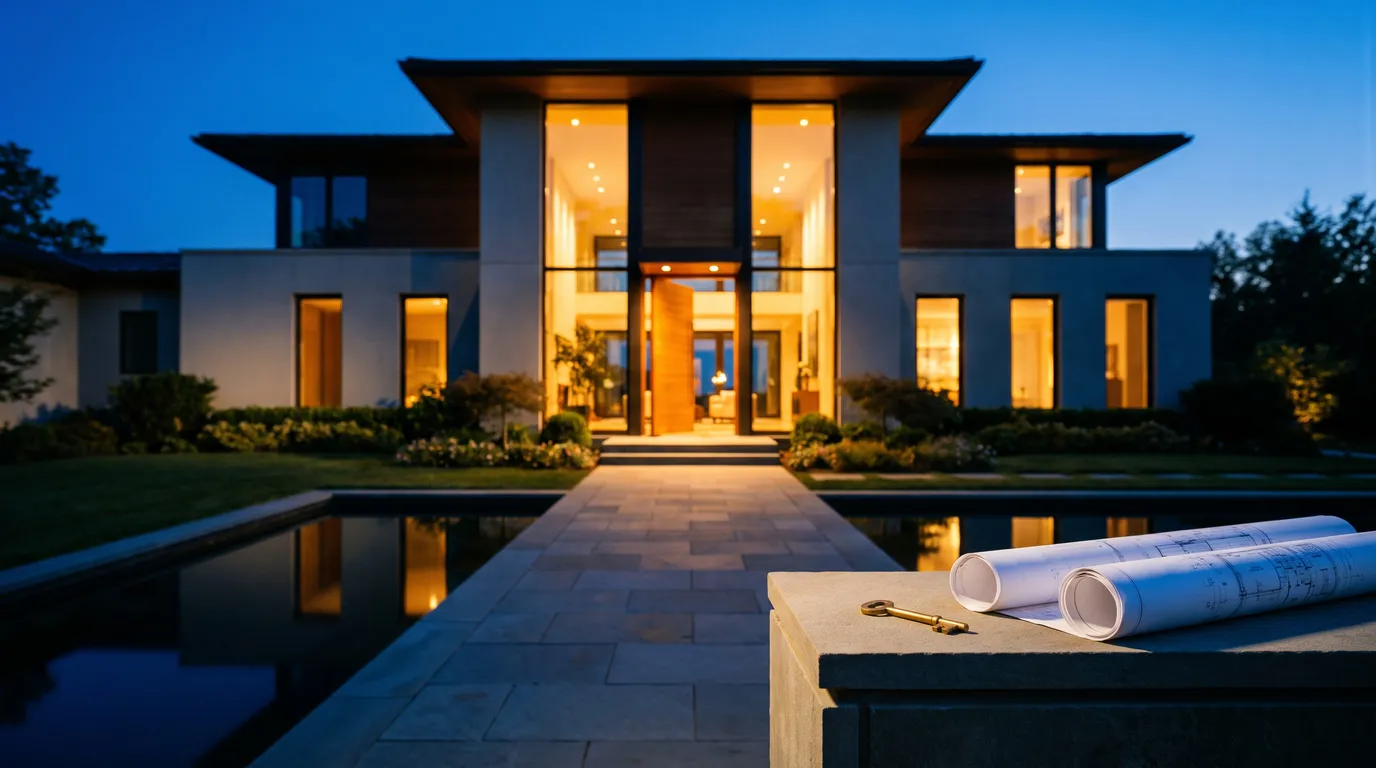
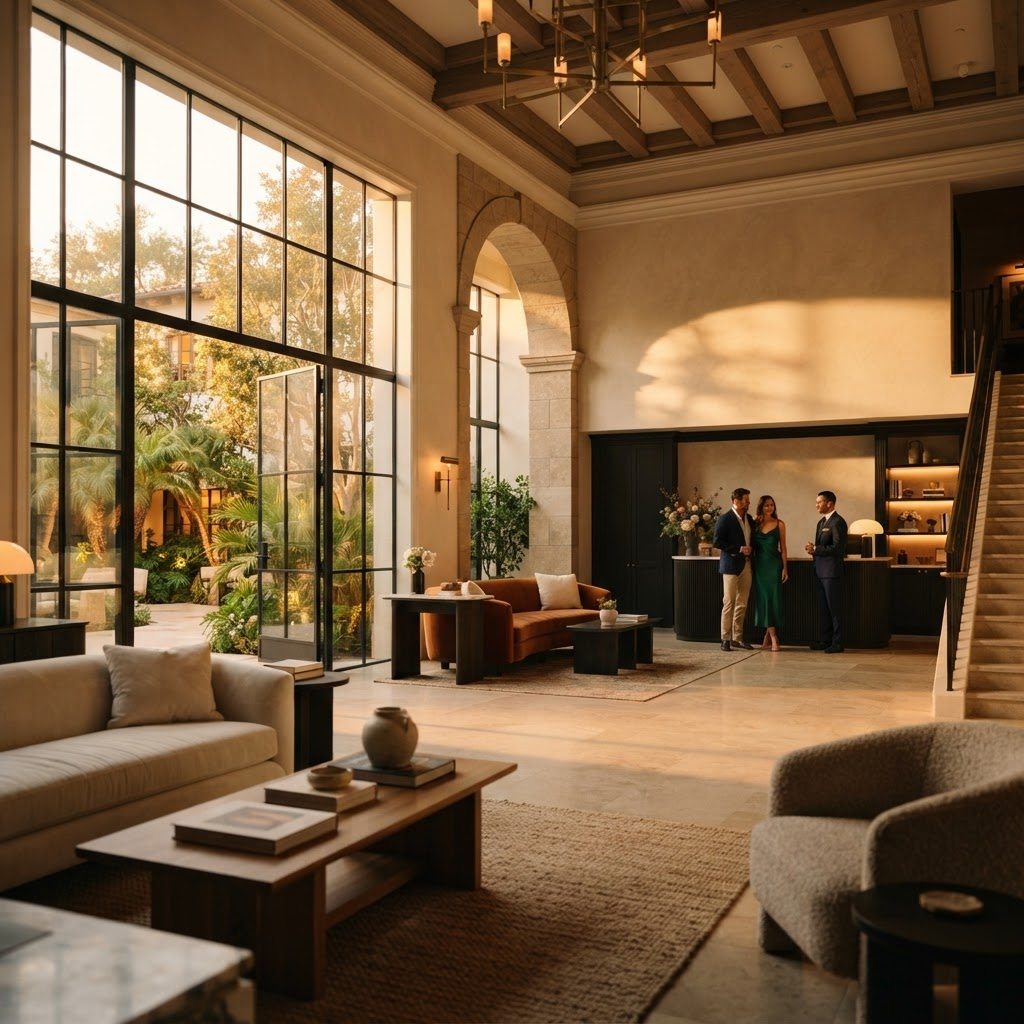
Boutique hotel advertising digital strategy isn't about chasing volume - it's about precision. While major hotel chains flood every channel with discount offers and loyalty point promotions, boutique properties have a structurally different problem: you need fewer guests, but significantly better ones. A 60-room property doesn't need to reach five million people. It needs to reach 50,000 of the right ones repeatedly, across channels, at exactly the moment they're planning travel.
Most boutique hotels fail at digital advertising not because their property isn't compelling, but because their media strategy is designed for mass scale rather than luxury depth. They run Google ads to drive direct bookings (and pay OTA margins anyway when they lose the attribution war), run Facebook retargeting that looks identical to a Marriott ad, and call it done. The result is a dependence on Expedia and Booking.com that quietly erodes margin with every passing quarter.
This guide outlines how premium boutique hotels can build a digital media program that fills rooms with guests who spend more at your restaurant, rebook at higher rates, and become the kind of advocates your brand actually needs.
Why Standard Hotel Marketing Doesn't Work for Boutique Properties
The economics of boutique hotel advertising are fundamentally different from mass-market hospitality. Consider:
- A 150-room Marriott Courtyard can afford a 3% commission to a demand partner because volume absorbs it.
- A 45-room independent property paying the same 3% plus OTA commissions of 15–25% is systematically losing margin it cannot recover on ADR alone.
Digital advertising done correctly serves as the direct-booking engine that reduces OTA dependency. But it only works if your media strategy is built around the right audience signals - affluent, intent-driven, and geographically qualified.
The second problem is message-market fit. Boutique hotels compete on experience, design, and exclusivity. But if your creative is running on low-quality inventory alongside fast food promotions, you're actively damaging the perception you're trying to build. Brand safety isn't a luxury; it's structural for any property charging $450+ per night.
The Affluent Traveler: Who You're Actually Targeting
Before selecting channels, define your actual buyer. In boutique hotel advertising, the target audience typically looks like this:
- Household income: $250,000–$1M+ annually
- Net worth: $1M–$10M (mass affluent to high-net-worth)
- Travel frequency: 4–8 leisure trips per year, plus business travel
- Booking behavior: Plans 3–8 weeks in advance for domestic, 8–16 weeks for international
- Decision journey: Research-heavy - reads reviews, reads editorial coverage, checks Instagram before booking
- OTA behavior: Uses OTAs for discovery but may prefer to book direct when the direct channel offers parity or better terms
This profile requires audience targeting that goes beyond demographic age/income buckets. The most effective boutique hotel advertising uses behavioral signals layered on top of declared wealth data: travel category browsing, luxury credit card spend modeling, premium brand affinity, and first-party engagement data from your own email and website lists.
The Channel Stack for Boutique Hotel Digital Advertising
Different channels serve different jobs in the affluent traveler's decision journey. Here's how to allocate:
Connected Television (CTV): The Awareness Engine
CTV reaches your audience in the highest-attention, highest-credibility environment in digital media - the living room television screen, on premium streaming platforms like Disney+, Hulu, Peacock, and Paramount+.
For boutique hotels, CTV accomplishes two things simultaneously: it delivers the visual storytelling that photography-driven properties require, and it reaches prospects during their leisure mindset, often exactly when travel planning conversations happen at home.
Targeting parameters that work for boutique hotel CTV:
- Affluent household income (modeled, $200K+)
- Luxury travel category intent
- Geographic targeting: drive markets (150–500 mile radius) plus key feeder cities by flight route
- Behavioral: luxury credit card users, premium airline flyers, high-end hotel bookers
Expected benchmarks: CTV video completion rates for premium inventory typically run 85–95% (unskippable placements). Cost per completed view on PMPs runs $0.04–$0.08 versus $0.02–$0.04 on open exchange - but the brand safety and audience quality premium is worth it.
Programmatic Display and Native: The Consideration Layer
Once CTV creates awareness, programmatic display and native placements keep your property visible as the prospect moves through consideration. This is where private marketplace deals become essential.
Open exchange programmatic will place your hotel ad next to low-quality content, gambling sites, or politically charged news - eroding the premium perception your ADR depends on. Private marketplace deals with premium publishers (Condé Nast, Travel + Leisure, Robb Report, Forbes, The Atlantic) ensure your creative appears in contexts that reinforce your brand positioning rather than undercutting it.
Native advertising performs particularly well in this phase because it matches the editorial environment rather than interrupting it. A travel feature-style native unit on Condé Nast Traveler that clicks through to a beautifully produced property page converts at meaningfully higher rates than a banner on a standard exchange.
Streaming Audio: Reaching Affluent Commuters and Frequent Flyers
Spotify Premium (ad-free) isn't the right target - but Spotify's free tier reaches an enormous volume of users, and the platform's demographic targeting, while imprecise, can be layered with geographic and behavioral data to reach younger affluent audiences. More importantly, streaming audio on platforms like SiriusXM, iHeartRadio, and podcast networks reaches high-income commuters and business travelers during drive time and workout routines - moments when travel planning is actively happening.
A 30-second audio spot with a strong offer (complimentary breakfast, late checkout, upgrade on arrival) provides an actionable hook that drives direct website traffic.
Paid Search: The Direct Booking Capture Layer
CTV and programmatic create demand. Paid search captures it. Without branded paid search, you're paying to build awareness that OTAs then convert through their own paid search presence.
Bidding on your own brand terms is non-negotiable. A competitor's Marriott property or a metasearch aggregator will gladly take that traffic if you leave it on the table.
Beyond branded search, target high-commercial-intent queries specific to your market: "[city] boutique hotel," "[neighborhood] hotel," "[event in your city] hotel," and seasonal queries like "[destination] romantic getaway" or "[destination] spa hotel."
First-Party Data: The Boutique Hotel's Competitive Advantage
One of the underappreciated assets of boutique hotel brands is the depth of first-party relationship they have with past guests. Unlike a Marriott or Hyatt, where guest data flows into a massive loyalty program and gets de-individualized, boutique hotels often know their guests by name, know what room they prefer, and have rich interaction history.
This data, when properly structured and deployed in digital advertising, creates a meaningful edge:
Custom audiences for exclusion: Remove current reservations from your acquisition campaigns to avoid wasting spend on already-converted guests.
Lookalike modeling: Upload your top 20% of guests (by lifetime value or repeat bookings) to advertising platforms to find structurally similar prospects. On CTV and programmatic DSPs, this modeling uses declared and behavioral data to find affluent households with identical travel patterns.
Win-back campaigns: Target past guests who haven't booked in 12–18 months with personalized messaging that references their previous stay (if your CRM supports dynamic creative). Even without personalization, reaching past guests with seasonal offers consistently outperforms cold prospecting at 2–4x lower CAC.
Email-to-CTV matching: Upload your email list for household matching against CTV devices. This allows you to serve video advertising on the television to email subscribers who may not have opened your last three campaigns - reaching them in a higher-attention environment with the same travel offer.
Attribution for Long Consideration Cycles
Boutique hotel bookings don't convert in a single session. A prospect may see your property on CTV in February, encounter you again on programmatic display in March, search for your property by name in April, and finally book in May for a June trip. Last-click attribution would credit the paid search click - and suggest that all your upper-funnel investment was wasted.
The right measurement framework for boutique hotel advertising uses:
| Attribution Method | What It Measures | Best Used For |
|---|---|---|
| Last-click | Final touchpoint before conversion | Paid search efficiency |
| Linear | Equal credit across all touchpoints | Understanding full journey |
| Time-decay | More credit to recent touchpoints | Consideration-phase channels |
| Incrementality testing | True causal lift from advertising | Budget allocation decisions |
| Holdout groups | Control vs. exposed booking rates | Proving CTV/programmatic value |
Incrementality testing is particularly critical for justifying CTV investment, which influences but doesn't directly drive the booking click. Running a holdout group - a geographically or device-matched audience that doesn't see your CTV campaign - and comparing their booking rates against the exposed group gives you a defensible, causal measure of what CTV is actually contributing.
Typical findings from Stillwater Media campaigns: boutique hotel properties that run coordinated CTV + programmatic campaigns against a matched holdout see 15–30% incremental lift in direct bookings during the campaign flight, depending on season, creative quality, and offer strength.
Budget Allocation by Property Size
Boutique hotel advertising budgets vary enormously based on property size, ADR, and competitive set. Here's a general framework:
Small property (30–60 rooms, ADR $300–$500):
- Monthly media spend: $8,000–$15,000
- CTV/streaming: 40%
- Programmatic display/native: 30%
- Paid search (branded + non-branded): 20%
- Streaming audio: 10%
Mid-size property (60–120 rooms, ADR $400–$700):
- Monthly media spend: $15,000–$35,000
- CTV/streaming: 45%
- Programmatic display/native: 25%
- Paid search: 20%
- Streaming audio + podcast: 10%
Large boutique (120–200 rooms, ADR $600+):
- Monthly media spend: $35,000–$75,000
- CTV/streaming: 50%
- Programmatic + native: 25%
- Paid search: 15%
- Streaming audio + podcast: 10%
The key insight: CTV allocation should increase as ADR increases, because the visual storytelling advantage of television-quality creative compounds at higher price points. A $700/night property can't afford to compete on price - it needs to win on desire, and CTV is where desire gets built at scale.
Common Mistakes Boutique Hotels Make in Digital Advertising
Running Meta ads as the primary channel. Facebook and Instagram reach a broad audience efficiently, but "efficient reach" at $15 CPMs means you're reaching thousands of people who would never pay your rates. Social is better deployed for remarketing to engaged audiences and content amplification, not prospecting.
Ignoring frequency management. Seeing the same hotel ad 12 times in a week is annoying, not persuasive. Cap frequency at 3–5 impressions per device per week across channels.
Measuring CAC from last-click only. If you measure media efficiency only from the channel where the booking converted, you'll defund the channels doing the actual persuasion work, and watch your direct bookings decline as OTA share grows.
Competing for volume instead of quality. Optimizing toward click-through rate is a trap - a $40/night budget property gets better CTR because the offer is more broadly appealing. Boutique hotel advertising should optimize toward qualified sessions (time on site, pages per visit, room type viewed) and ultimately revenue per room night, not clicks.
Underinvesting in creative. A 30-second CTV spot shot on a smartphone will perform at a fraction of what a professionally produced cinematic piece delivers. For premium inventory, creative quality is a performance variable, not an aesthetic choice.
The Stillwater Media Approach to Luxury Hospitality
At Stillwater Media, we work with luxury hospitality brands that are done competing on price and ready to compete on precision. Our approach starts with audience engineering - building a bespoke targeting architecture using your first-party data, premium third-party affluent audience segments, and behavioral intent signals specific to your feeder markets.
We place boutique hotel advertising exclusively in brand-safe environments through private marketplace deals with premium publishers, so your property's visual identity is never adjacent to content that undermines it. And we measure results through incrementality testing that tells you exactly how much of your direct booking revenue is attributable to media investment - not just correlated with it.
If you're ready to reduce OTA dependency and build a media program that converts affluent travelers into loyal guests, apply to work with Stillwater Media.