
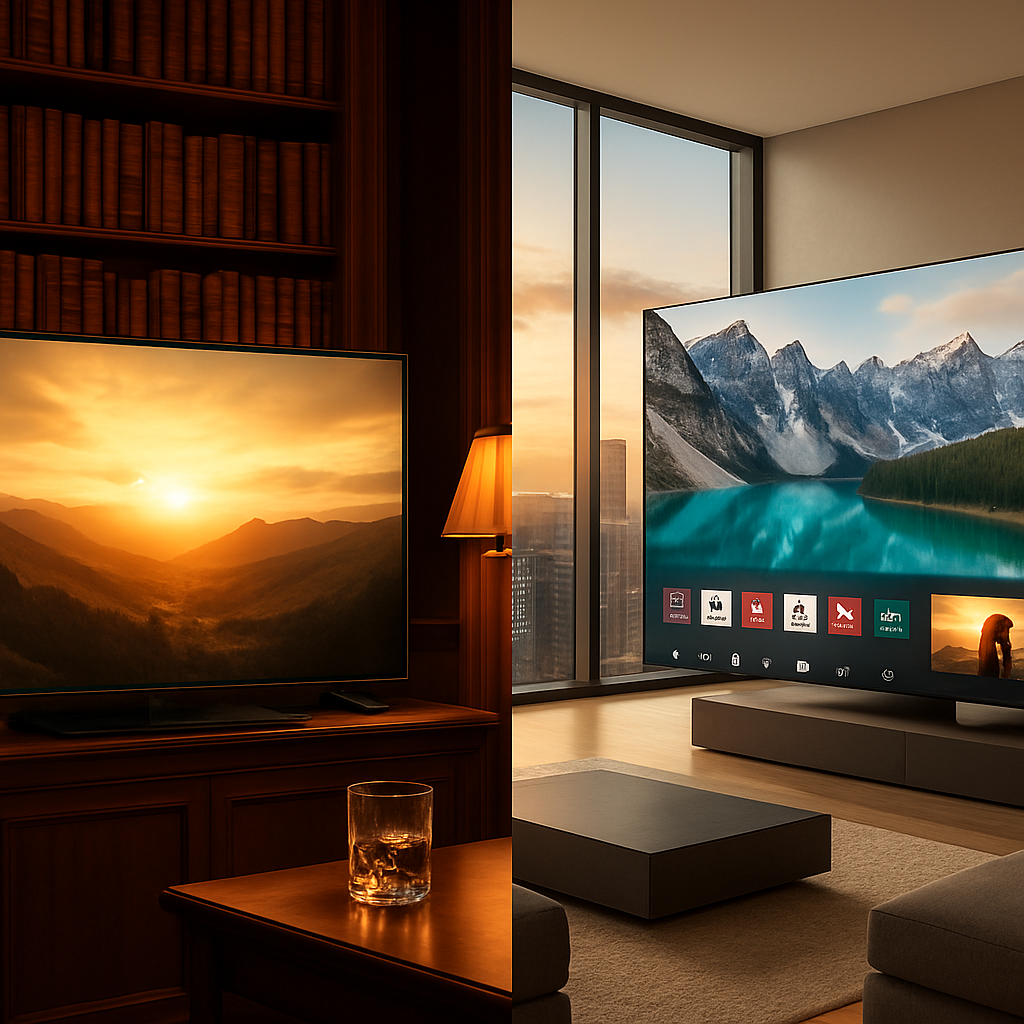
The Fundamental Difference: Reach vs. Precision
Linear TV operates on a model that has not changed since the 1950s: a network aggregates a large audience, advertisers buy access by rating point or GRP (gross rating point), and the ad runs in a fixed time slot to everyone watching. You cannot choose who sees your ad.
Connected TV is structurally different at its foundation. The viewer is authenticated - logged into a streaming platform - which means the platform knows who they are. Demographics, content preferences, subscription tier, device behavior, and household data are all attached to the impression. When a luxury advertiser runs a CTV campaign targeting households with $500K+ in investable assets, they are describing a real, identifiable audience that CTV platforms can locate and serve.
That distinction - anonymous audience inference on linear versus authenticated individual targeting on CTV - is the axis around which every other comparison rotates.
Audience Reach: Where Linear TV Still Holds Ground
Despite cord-cutting trends, linear television still commands aggregate reach that streaming has not fully replaced. According to Nielsen data, linear TV still reaches roughly 70–75% of US adults monthly, though average time-spent is declining annually.
For luxury advertisers, the relevant question is not total reach but reached audience quality. Linear television reach skews toward older, less affluent audiences who have been slower to adopt streaming. Consumers under 55 with household incomes above $150,000 are dramatically overrepresented in streaming audiences.
This does not mean linear TV is valueless for luxury brands. Events programming - the Super Bowl, major golf tournaments, tennis Grand Slams, award shows - concentrates affluent, aspirational audiences in ways that scatter-buy linear never does. The mistake is buying linear scatter inventory year-round and calling it a television strategy.
Targeting Capabilities: The Decisive Advantage of CTV
The targeting architecture of CTV has no parallel in linear television:
Deterministic Audience Matching
Streaming platforms that require authentication know who their users are. Disney+ can match against its own subscriber data - HHI, household composition, location, subscription tier, viewing behavior. Amazon Prime Video has the additional advantage of purchase behavior: Amazon knows what its users have bought, creating purchase intent signals unavailable elsewhere.
Third-Party Audience Enrichment
CTV DSPs can layer third-party data segments onto streaming inventory. Experian, Neustar, Epsilon, TransUnion, and Oracle Advertising offer affluent consumer segments: high-net-worth households, wealth deciles, luxury purchase history, vehicle ownership data.
Geographic Precision
Linear TV buying is DMA-based (Designated Market Area). CTV can target at the ZIP code level, neighborhood level, and household level. For a private club, boutique hotel, or wealth management firm, CTV's geographic granularity dramatically increases campaign efficiency.
Contextual and Content-Level Targeting
Advertisers can target by content genre, show category, or viewer interest signal. Running a private aviation brand's creative alongside travel documentary content reinforces message relevance.
Measurement and Attribution: CTV's Structural Edge
Perhaps the most important difference between CTV and linear TV for a performance-oriented luxury advertiser is measurement capability. Linear TV measurement is fundamentally sample-based and probabilistic. CTV measurement operates on impression-level data - every served impression is logged, timestamped, and tied to a user ID.
Brand Lift Studies
CTV campaigns can run exposed vs. unexposed surveys with statistical precision. We can answer whether people who saw your campaign showed higher unaided awareness, purchase intent, or brand favorability with 95%+ confidence intervals.
Household-Level Conversion Matching
First-party data can be matched against CTV impression data through clean room environments to identify how many households exposed to the campaign subsequently visited the website, requested information, or converted. This closed-loop measurement is impossible on linear TV.
Incrementality Testing
Holdout methodology - randomly suppressing your CTV campaign from a matched control group and comparing conversion rates - works at scale in CTV environments. For luxury brands with long sales cycles, incrementality measurement is the only rigorous way to prove that the TV investment is actually driving outcomes.
CPM Comparison: What You Actually Pay
| Placement Type | Estimated CPM Range |
|---|---|
| Linear TV - National Scatter (prime time) | $25–50 |
| Linear TV - Cable News / Sports (scatter) | $15–35 |
| Linear TV - Major Events (Super Bowl, Masters) | $70–200+ |
| CTV - Open Programmatic Exchange | $10–25 |
| CTV - Private Marketplace Deal | $35–80 |
| CTV - Disney+ / Hulu Direct Deal | $45–90 |
| CTV - Netflix / Prime Video (managed service) | $30–55 |
| CTV - Programmatic Guaranteed, Premium Content | $55–120 |
The raw CPM comparison can be misleading. Linear TV's lower CPMs on scatter buys often reflect audiences with significant non-target waste. CTV's higher CPMs on premium inventory, when purchased against tightly defined affluent audiences, produce lower cost-per-qualified-impression.
Full CTV vs. Linear TV Comparison
| Dimension | Linear TV | Connected TV (CTV) |
|---|---|---|
| Audience targeting | Demographic inference only | Deterministic, data-matched audiences |
| Minimum spend | $50K–$250K+ national | $10K–$25K+ meaningful scale |
| Geographic granularity | DMA-level | ZIP/neighborhood/household |
| Completion rate | Zap/skip risk, no tracking | 90–96% (non-skippable) |
| Measurement | Sample-based (Nielsen panels) | Impression-level, actuals |
| Attribution capability | Very limited | Household-level conversion matching |
| Brand lift measurement | Available, expensive | Available, lower cost |
| Incrementality testing | Difficult/expensive | Standard practice |
| Creative flexibility | Static 30/60s spots | Sequencing, interactive, DCO |
| Frequency control | Minimal | Precise capping |
| Brand safety | Network-level only | Publisher + content-level |
| Best for luxury? | Events/tentpole programming | Precision awareness + retargeting |
The Hybrid Strategy: How Stillwater Allocates Television Budgets
The right answer for most luxury advertisers is not a binary choice - it is a deliberate hybrid model that uses each channel for what it does best:
Linear TV for Reach Anchoring
Reserve linear television spend for high-profile events where target affluent demographics concentrate (golf majors, luxury auto race coverage, high-income sports programming). Use these to drive broad awareness that anchors your brand in cultural moments your target customer participates in. Budget: 20–35% of total television allocation.
CTV for Precision and Continuity
The majority of television investment should move to premium CTV environments - streaming inventory on Disney+, Hulu, Prime Video, and Peacock purchased through private marketplace deals or managed service deals. Layer deterministic affluent audience targeting. Use frequency capping (typically 3–5 exposures per household over 30 days) to maintain message pressure without overexposure. Budget: 65–80% of total television allocation.
Measurement Infrastructure
Before running either channel in earnest, establish the measurement infrastructure that will let you prove incrementality. For CTV, this means clean room setup, first-party data integration, and holdout design. For linear, it means brand lift study parameters and marketing mix model integration.
The Streaming Platform Landscape for Luxury Advertisers in 2026
Platform selection matters significantly for luxury brands. Not all streaming platforms deliver the same audience quality:
Disney+
Ad tier reached tens of millions of subscribers. Disney's audience is broad, but the premium content environment (Marvel, Star Wars, National Geographic, ABC) and the platform's refusal to allow alcohol, firearms, or competitive direct ads creates a brand-safe, premium adjacency. Strong for luxury lifestyle, travel, and aspirational brands.
Hulu
The most mature AVOD platform in the US market, with strong reach among 25–54 year olds and above-average household income among subscribers. Offers the most flexible programmatic access with strong private marketplace deal infrastructure.
Prime Video
Amazon's ad-supported tier brings Amazon's unparalleled purchase data into a premium video environment. For luxury brands where purchase history and product browse behavior are relevant targeting signals, Prime Video's data asset is distinctive.
Netflix
Netflix offers managed service advertising with strict category and adjacency controls. The platform's subscriber base skews young and high-income. Best for luxury brands prioritizing adjacency quality and reach among younger affluent audiences.
Why CTV Wins the Long-Term Battle for Luxury Brands
Linear TV is a declining channel in terms of both reach and audience quality among affluent consumers luxury brands target. Nielsen data shows consistent, multi-year declines in linear TV viewership among 18–54 year olds, with the steepest declines among higher-income households. This is a structural shift, not a cyclical trend.
CTV offers what luxury brands have always needed but could never access through television: the ability to target by who someone is rather than where they are watching. For a category where the difference between a qualified prospect and a non-prospect is behavioral and financial, authenticated audience data is transformational. The ability to tell a sequential story across multiple streaming touchpoints - awareness, consideration, conversion - using different creative executions tied to where a prospect is in the purchase funnel is genuinely powerful.
The shift is not 100% CTV. It is a thoughtful reallocation where the vast majority of investment moves to premium CTV and linear is reserved for high-leverage reach moments. That is the future of television for luxury advertisers.
Ready to build a strategic CTV plan? Apply to work with Stillwater Media →